Late Stage
Sliding Down the Bed? The ‘Knee-Break’ Hospital Bed Hack
Updated
Need to know
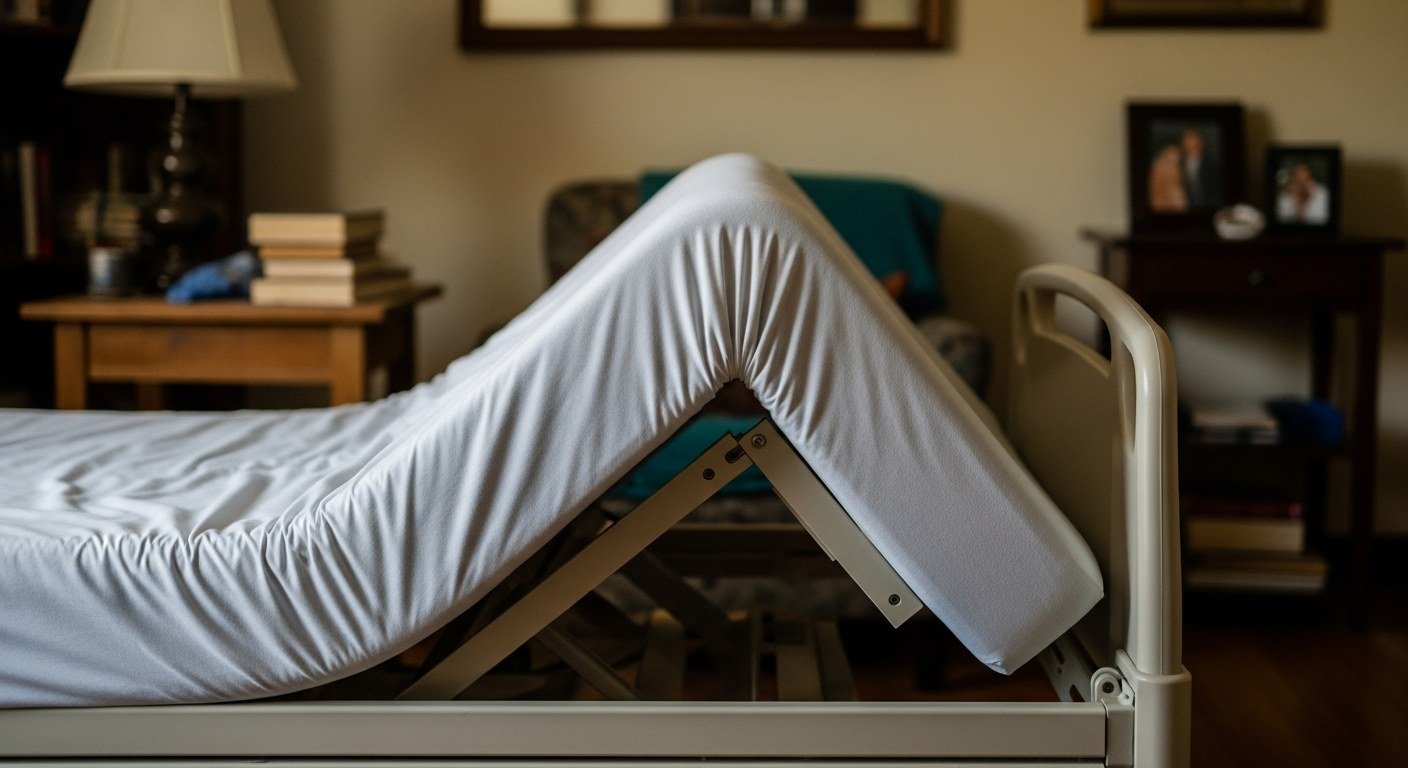
What Is the ‘Knee-Break’ and Why Does It Work?
Quick answer
Hospital bed sliding in Parkinson’s is caused by gravitational shear forces when the head is raised alone. The most effective intervention is the ‘Knee-Break’ method, which works by creating a pelvic lock to help prevent sliding. It is recommended to raise the patient’s knees to create a stable base before elevating their head.
Clinical References
- Wound, Ostomy, and Continence Nurses Society. Clinical Practice Guideline for Prevention and Management of Pressure Injuries (Ulcers). WOCN, Current Guidelines.
- American Occupational Therapy Association. AOTA Practice Guidelines for Productive Aging for Community-Dwelling Older Adults. AOTA, Current Guidelines.
- Boltz, M., Capezuti, E., Fulmer, T., & Zwicker, D. (Eds.). Evidence-Based Geriatric Nursing Protocols for Best Practice. Geriatric Nursing Standards, Current Guidelines.
In This Article
- What Is the 'Knee-Break' and Why Does It Work?
- How Does Sliding Cause Severe Skin Damage?
- What Is the Correct Sequence for Repositioning?
- The Unseen Financial Cost of Bedsores
- How to Request a Professional Bed Evaluation
The Hidden Danger of the 'Head-Up' Button
You help your loved one get comfortable, raising the head of the hospital bed so they can watch TV or eat. An hour later, they’ve slid down towards the foot of the bed, their body contorted and uncomfortable. This frustrating cycle isn't just about comfort; it's a dangerous process called 'shear' that can lead to severe bedsores. The downward slide creates friction and damages fragile skin, particularly at the tailbone. Understanding the simple 'Knee-Break' hack can protect your loved one and give you peace of mind. You're not alone in managing these complex late-stage challenges.
3 Clinical Strategies
Reviewed against current clinical practice standards.
01A SILENT EPIDEMIC
1 in 4
Up to 1 in 4 residents in long-term care facilities may have a pressure injury (bedsore) at any given time, a risk significantly increased by improper bed positioning. (Source: CDC, Current Guidelines)
Every night, it was the same. I’d get Dad settled, his head propped up just right. By my midnight check-in, he’d be slumped down, his back uncomfortably bent and his gown bunched up. I felt like I was failing, constantly having to hoist him back up, which was exhausting for both of us. I was so focused on raising his head that I completely ignored the button with the bent knee icon. The night I finally tried it—knees up first, then head up—was a revelation. He didn't budge. Not an inch. It was such a simple fix for a problem that had caused us so much stress.
Medical & legal disclaimer. This protocol is general educational information. It is not medical advice and does not replace your care team. Always consult your neurologist before changing medications or care. In an emergency, call 911.