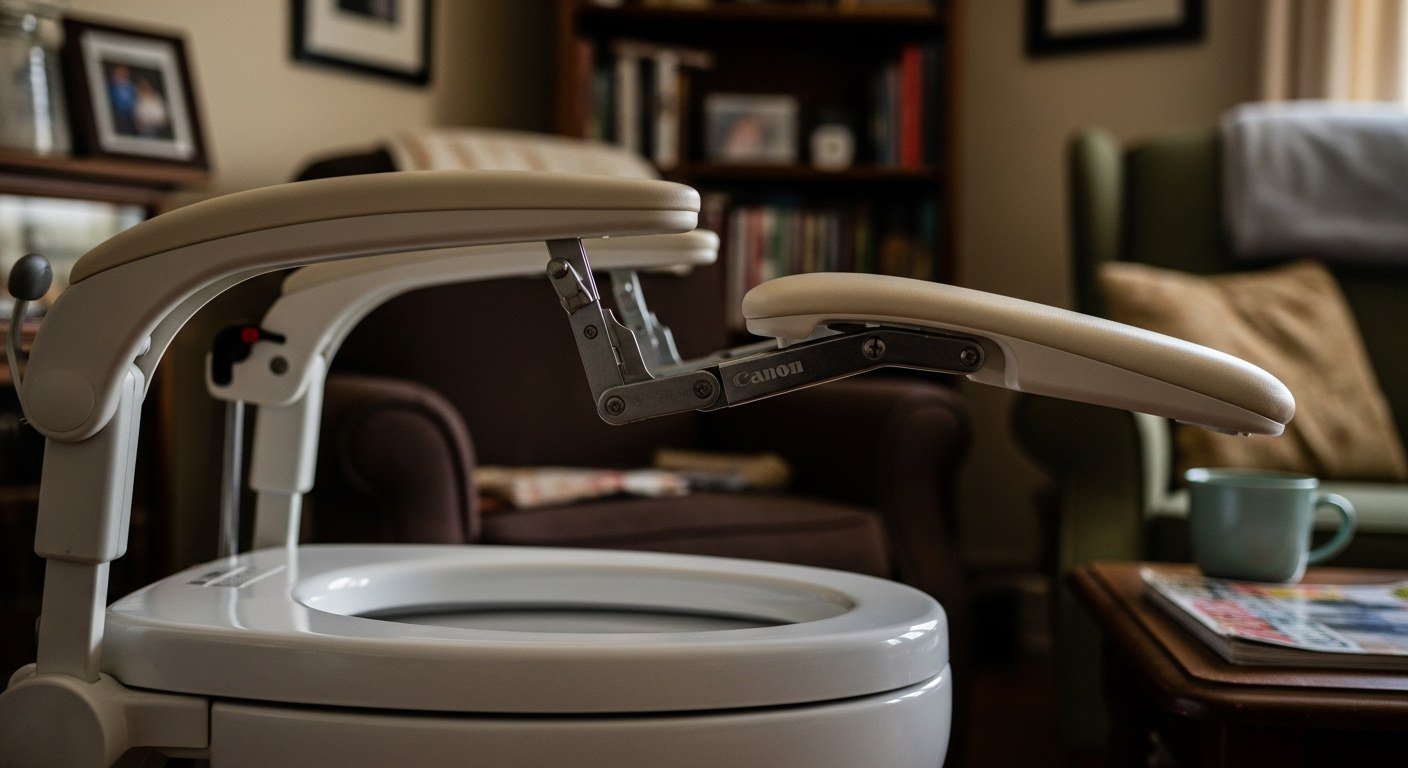
- Standard commodes are often denied, but a drop-arm model may be approved if prescribed as medically necessary for lateral transfers due to mobility impairment. (Source: CMS, Current Guidelines)
- According to the Centers for Medicare & Medicaid Services (CMS), "Heavy-duty drop-arm commodes are covered under Part B DME when prescribed to facilitate safe lateral transfers for mobility-impaired beneficiaries." [3]
- The physician's prescription must explicitly state the need for the 'drop-arm' feature to enable seated lateral transfers because the patient cannot safely stand and pivot. (laws and coverage vary by state and individual plan — consult a licensed professional or SHIP counselor for your specific situation)
💡 What You Can Do Today: Draft an email to the doctor's office portal: 'We are requesting a prescription for a heavy-duty drop-arm commode (HCPCS code E0165) and a transfer board to facilitate safe seated lateral transfers, as standing is no longer possible.'
Are you struggling with unsafe and exhausting toilet transfers?
You don't have to risk injury to yourself or your loved one.
Request a Call
Comparing Toileting Aids for Advanced Parkinson's
| Toileting Aid | Best For | Key Limitation | Typical Cost |
|---|
| Standard Toilet Riser | Early-stage PD with good leg strength. | Requires user to stand and pivot; useless if patient cannot stand. | $30-$60 |
| Standard Bedside Commode | Patients who can stand but cannot walk to the bathroom. | The fixed armrest requires a dangerous standing pivot to use. | $60-$150 |
| Drop-Arm Commode | Patients who cannot safely stand or pivot. | Requires a caregiver to properly position and assist with the slide. | $100-$300 (Often covered by Medicare) |
The Financial & Legal Risks of Not Using the Right Equipment
A single fall can result in a hip fracture, leading to hospitalization, surgery, and a lengthy, costly stay in a skilled nursing facility—often exceeding $100,000. For caregivers, attempting unsafe transfers can lead to debilitating back injuries, impacting their ability to provide care and potentially their own livelihood. If you employ paid caregivers, providing improper equipment that leads to their injury could create significant liability. Investing in a sub-$300 commode, especially one covered by Medicare, is a financially sound decision that mitigates catastrophic physical and financial risk. The cost of inaction is far greater than the cost of the correct equipment.
A fall-related hospitalization can easily erase a lifetime of savings. The right equipment is a critical form of financial protection.
How to Discuss a Drop-Arm Commode with the Medical Team
When speaking with a doctor, physical therapist, or occupational therapist, use specific language. Don't just say your loved one is 'having trouble in the bathroom.' State clearly: 'We can no longer safely perform a standing pivot transfer. We need a solution for seated lateral transfers.' Formally request an OT/PT evaluation to assess transfer safety and prescribe the appropriate durable medical equipment (DME). Document your request in the patient portal. A therapist's note confirming the inability to stand and pivot is powerful evidence for getting Medicare or insurance to cover the equipment (rules and coverage vary by state and individual plan — consult a licensed professional or SHIP counselor for your specific situation).
✅ Your Next Steps
Use this checklist to start today.
- ✅ Add to Prep PDF: DME Prescription request for a Drop-Arm Commode and sliding transfer board.
- ✅ Measure Key Heights: Measure the height of the wheelchair seat and the top of the bed mattress. The commode seat must adjust to be level with or slightly below these surfaces.
- ✅ Request an OT/PT Consult: Ask your neurologist for a referral to an Occupational or Physical Therapist to get hands-on training for safe slide transfers.
- ✅ Plan Your Space: Identify where the commode will go. Ensure there is enough clear floor space next to the bed or in the bathroom to position a wheelchair parallel to the commode.
- ✅ Join the Community: Attend a free Parkinsons.Community peer support session to share strategies with other caregivers managing late-stage mobility.
Clinical References
- American Physical Therapy Association. 'Guidance on Safe Patient Handling and Mobility for Physical Therapists.' APTA, Current Guidelines.
- American Occupational Therapy Association. 'Best Practices for Activities of Daily Living (ADL) in Neurological Conditions.' AOTA, Current Guidelines.
- Centers for Medicare & Medicaid Services. 'Durable Medical Equipment (DME) Benefit Policy Manual.' CMS, Chapter 1, Section 110.1.
⚠️ Medical & Legal Disclaimer: This article is for educational purposes only and does not constitute medical advice. Consult a Movement Disorders Specialist for evaluation of Drop-Arm Commode Transfers. Parkinsons.Community provides educational navigation support only and does not perform clinical triage.
📞 When to Call 911: If you or your loved one experiences a medical emergency — difficulty breathing, loss of consciousness, a fall with injury, chest pain, or sudden severe confusion — call 911 immediately. The information on this page is educational and does not replace emergency medical services.
FREE MEMBER BENEFIT
You Don't Have to Face This Alone
The transition to needing this level of care can be emotionally and physically draining. Connecting with other caregivers who have navigated this exact challenge provides practical tips and essential emotional support.
Join Parkinsons.Community
Educational support only. Never medical triage.