Late Stage
Loading the Wheelchair: Preventing Caregiver Back Injuries
Updated
Need to know
Why Does Lifting a Wheelchair Cause So Many Back Injuries?
Quick answer
Repetitive wheelchair loading causes severe caregiver back injuries by overloading the lumbar spine. The most effective intervention is the ‘Bumper Pivot’ technique, which uses the car’s bumper as a fulcrum to eliminate lifting. Before your next trip, practice folding the chair and rolling it to the car bumper.
Clinical References
- Occupational Safety and Health Administration. Ergonomic Guidelines for Non-Clinical Patient Handling. OSHA, Current Guidelines.
- American Physical Therapy Association. Biomechanical Principles of Safe Patient and Equipment Transfers. APTA, Current Guidelines.
- American Occupational Therapy Association. Position Paper on Durable Medical Equipment and Caregiver Injury Prevention. AOTA, Current Guidelines.
In This Article
- Why Does Lifting a Wheelchair Cause So Many Back Injuries?
- How to Perform the 'Bumper Pivot' Technique Step-by-Step
- Switching to a Transport Chair: Is It Worth It?
- The Financial and Legal Stakes of a Caregiver Injury
- Protecting Your Body: Essential Biomechanics for Every Lift
The Lift That Breaks Caregivers
Lifting a 35-50 pound wheelchair in and out of a car multiple times a day isn't just tiring—it's a leading cause of debilitating back injury for Parkinson's caregivers. The repetitive strain on the lumbar spine can lead to chronic pain, herniated discs, and an injury that could prevent you from providing care at all. The key isn't to lift with your legs; it's to stop lifting entirely by using physics. Understanding how to use leverage is the single most important skill to protect your long-term health as a caregiver. You are not alone in this daily struggle, and there are simple techniques that can make an immediate difference.
3 Clinical Strategies
Reviewed against current clinical practice standards.
01A CAREGIVER HEALTH CRISIS
50%
Over 50% of family caregivers rate their physical health as fair or poor, often due to the strain of physical care tasks like transfers and equipment handling. (Source: Family Caregiver Alliance, Current Guidelines)
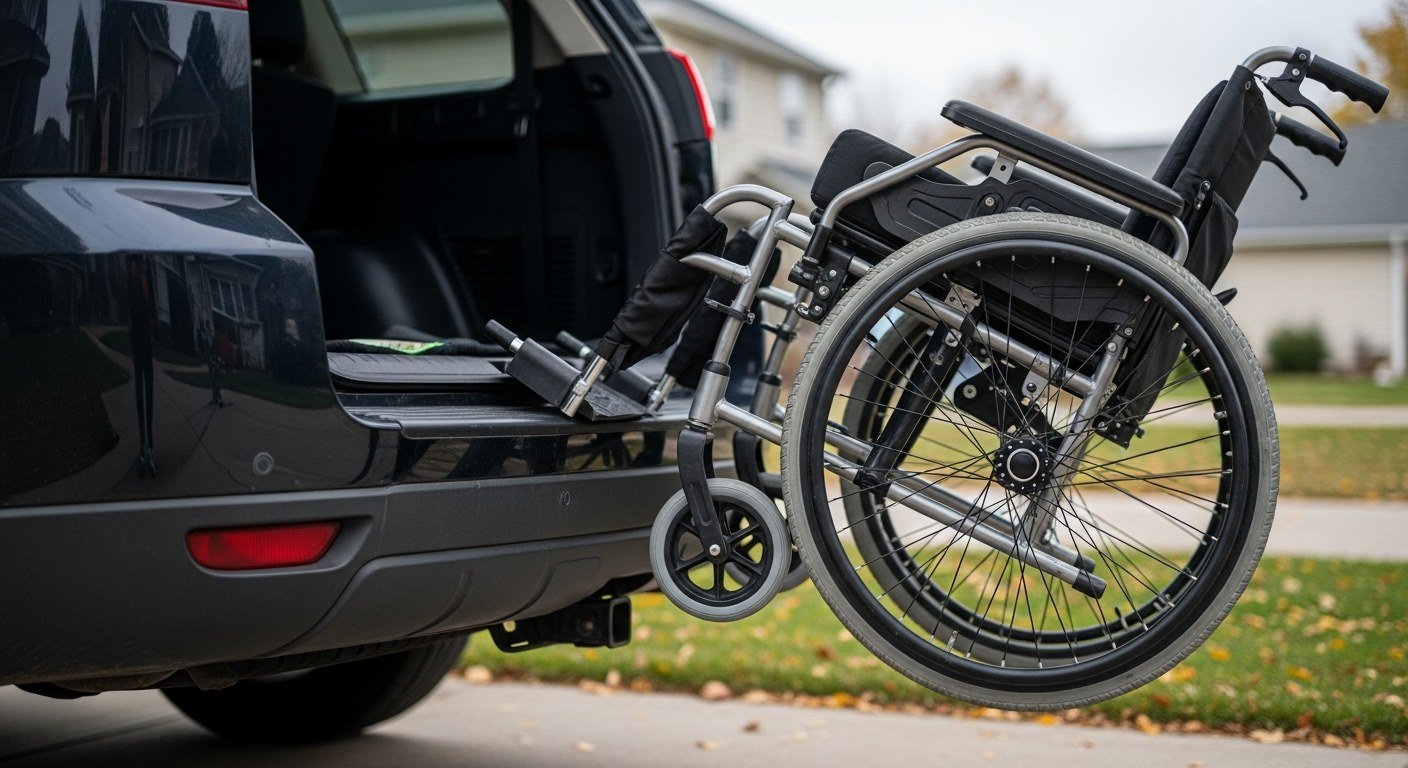
It was 10 PM. After a long day of appointments, the last obstacle was the wheelchair. My back was already screaming. I hated this part. I'd brace myself, bend down, and try to hoist the heavy, awkward chair into the trunk, feeling that familiar, terrifying twinge in my lower back every time. One night, a physical therapist showed me the 'trick': Never dead-lift the chair. Fold it, roll the large rear wheels directly against the car's rear bumper. Lock the brakes. Grab the front handles, lean the chair backwards onto the bumper, and slide it in. The car acts as the fulcrum. It changed everything.
Medical & legal disclaimer. This protocol is general educational information. It is not medical advice and does not replace your care team. Always consult your neurologist before changing medications or care. In an emergency, call 911.