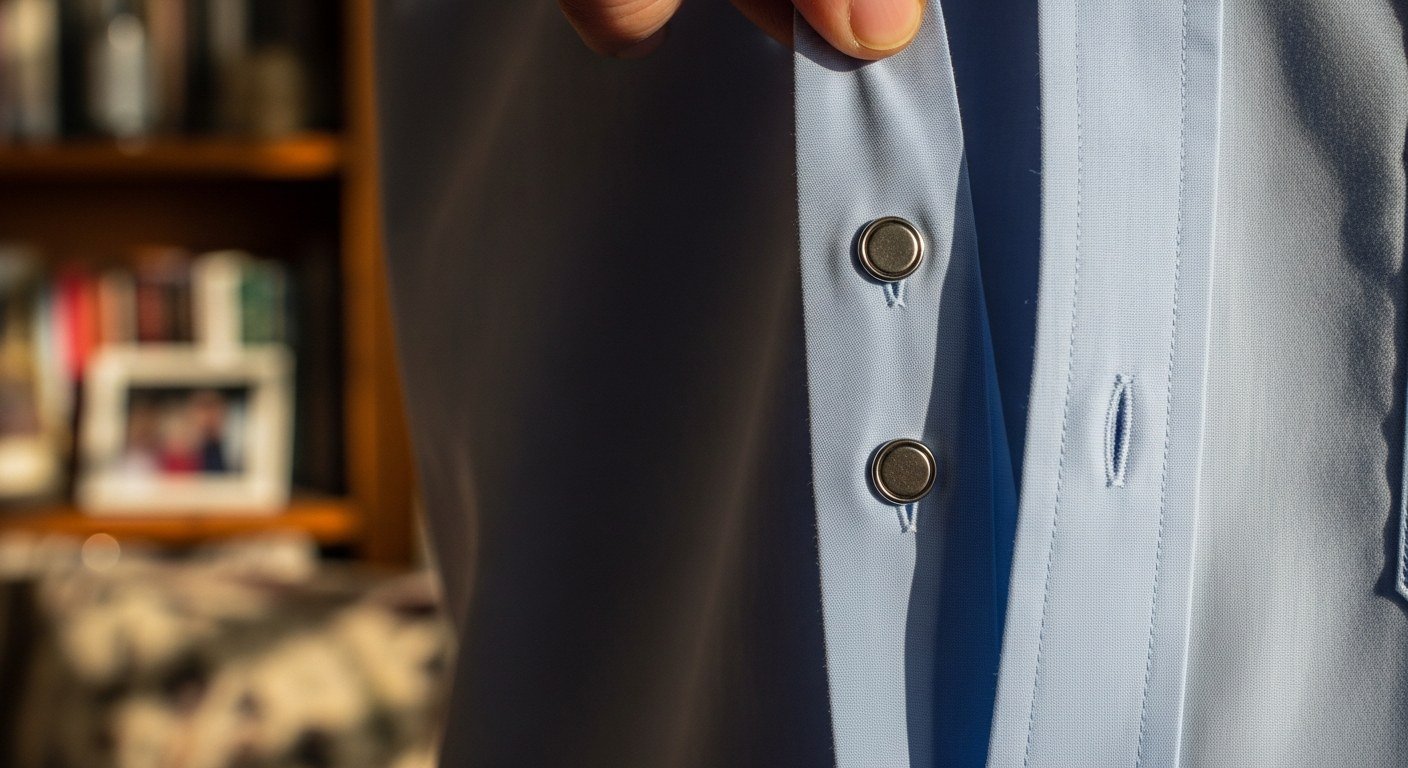
- Replacing complex fasteners like buttons and laces significantly lowers the cognitive load and frustration associated with dressing. (Source: MDS, Current Guidelines)
- The Movement Disorder Society (MDS) notes, 'Substituting complex fasteners with adaptive apparel significantly reduces both patient frustration and caregiver morning physical strain.' [3]
- Velcro-closure shoes or elastic 'no-tie' laces completely eliminate the need to bend over and tie shoes, a high-risk activity for balance-impaired individuals.
💡 What You Can Do Today: What You Can Do Today: Go to any major pharmacy or online retailer and buy a pair of elastic 'no-tie' shoelaces for less than $10. You can install them on existing, familiar shoes in minutes for an immediate win.
Are you tired of the daily struggle with buttons and shoelaces?
You don't have to face these logistical and emotional challenges alone.
Request a Call
Which Dressing Strategy Is Right for You?
| Approach | Best For | Time to Start | Cost |
|---|
| DIY Modifications | Individuals with mild motor symptoms or those on a tight budget. Good for favorite, existing garments. | Immediate | Low ($10-30 for Velcro/magnets) |
| Purchase Adaptive Clothing | Moderate to advanced symptoms where DIY is too difficult. Offers the widest range of solutions. | 2-5 Days (Shipping) | Moderate ($50-100 per item) |
| Occupational Therapy (OT) Consult | Complex needs, multiple ADL challenges, or seeking insurance coverage for devices. | Weeks to Months | High (Covered by many insurance plans) |
The Hidden Financial Stake: How Adaptive Clothing Can Delay Costly Care
The investment in adaptive clothing is not just about convenience; it's a strategic financial decision. The ability for a person with Parkinson's to dress independently directly impacts their need for paid assistance. By preserving autonomy in this core activity of daily living (ADL), families may be able to delay or reduce the hours of in-home care required. According to the Family Caregiver Alliance, the national median cost for a home health aide is significant. Extending independence, even by a few months or a year, can translate into thousands of dollars in saved expenses, while also boosting the patient's morale and sense of self-worth. This makes adaptive clothing a powerful tool in the financial planning for long-term Parkinson's care.
A $70 magnetic shirt that preserves dressing independence might defer the need for a $30/hour home health aide.
How to Ask Your Doctor for an Occupational Therapy Referral
Your primary care physician or neurologist may not ask about dressing challenges directly. You need to bring it up. Instead of saying 'Dressing is hard,' use specific language to secure an Occupational Therapy (OT) referral. Frame your request around function and safety. For instance: 'We are concerned about a decline in Activities of Daily Living, specifically dressing. It's causing significant fatigue and I'm worried about fall risk while getting pants on.' Then, ask directly: 'Could you please provide a referral to an Occupational Therapist to evaluate for adaptive equipment and strategies to maintain independence?' An OT is the key professional for this issue and can provide customized recommendations. Always discuss any new strategies or concerns with your medical team.
✅ Your Next Steps
Use this checklist to start today.
- ✅ Add to Prep PDF: Request OT evaluation for assistive dressing devices and adaptive ADL strategies.
- ✅ Simplify Footwear: Purchase a pair of elastic 'no-tie' shoelaces online or from a local pharmacy.
- ✅ Inventory the Closet: Identify the top 3 most difficult garments to put on and search for adaptive alternatives online.
- ✅ Schedule a Chat: Set aside time to discuss the emotional frustration of dressing and agree to try one new solution together.
- ✅ Join the Community: Attend a free Parkinsons.Community peer support session to share tips with others facing the same challenges.
Clinical References
- Foki T, Vanbellingen T, et al. Limb-kinetic apraxia affects activities of daily living in Parkinson's disease: a multi-center study. Eur J Neurol. 2016;23(8):1301-7. PMID: 27132653.
- Sturkenboom IH, Graff MJ, et al. Efficacy of occupational therapy for patients with Parkinson's disease: a randomised controlled trial. Lancet Neurol. 2014;13(6):557-66. PMID: 24726066.
- Schrag A, Jahanshahi M, et al. What contributes to quality of life in patients with Parkinson's disease?. J Neurol Neurosurg Psychiatry. 2000;69(3):308-12. PMID: 10945804.
- Parkinson's Foundation. Occupational Therapy & Parkinson's Disease: Adapting Daily Activities Including Dressing. Parkinson's Foundation; 2026.
- Parkinson's Foundation. Practical Pointers for Care Partners: Managing Day-to-Day Challenges Including Adaptive Clothing and Assistive Devices. Parkinson's Foundation; 2026.
⚠️ Medical & Legal Disclaimer: This article is for educational purposes only and does not constitute medical advice. Consult a Movement Disorders Specialist for evaluation of Adaptive Clothing. Parkinsons.Community provides educational navigation support only and does not perform clinical triage.
📞 When to Call 911: If you or your loved one experiences a medical emergency — difficulty breathing, loss of consciousness, a fall with injury, chest pain, or sudden severe confusion — call 911 immediately. The information on this page is educational and does not replace emergency medical services.
FREE MEMBER BENEFIT
Dressing Should Not Be a Daily Defeat
The daily frustration of dressing can erode confidence and strain relationships. Sharing solutions and hearing what works from other families can provide immediate relief and practical hope.
Join Parkinsons.Community
Educational support only. Never medical triage.