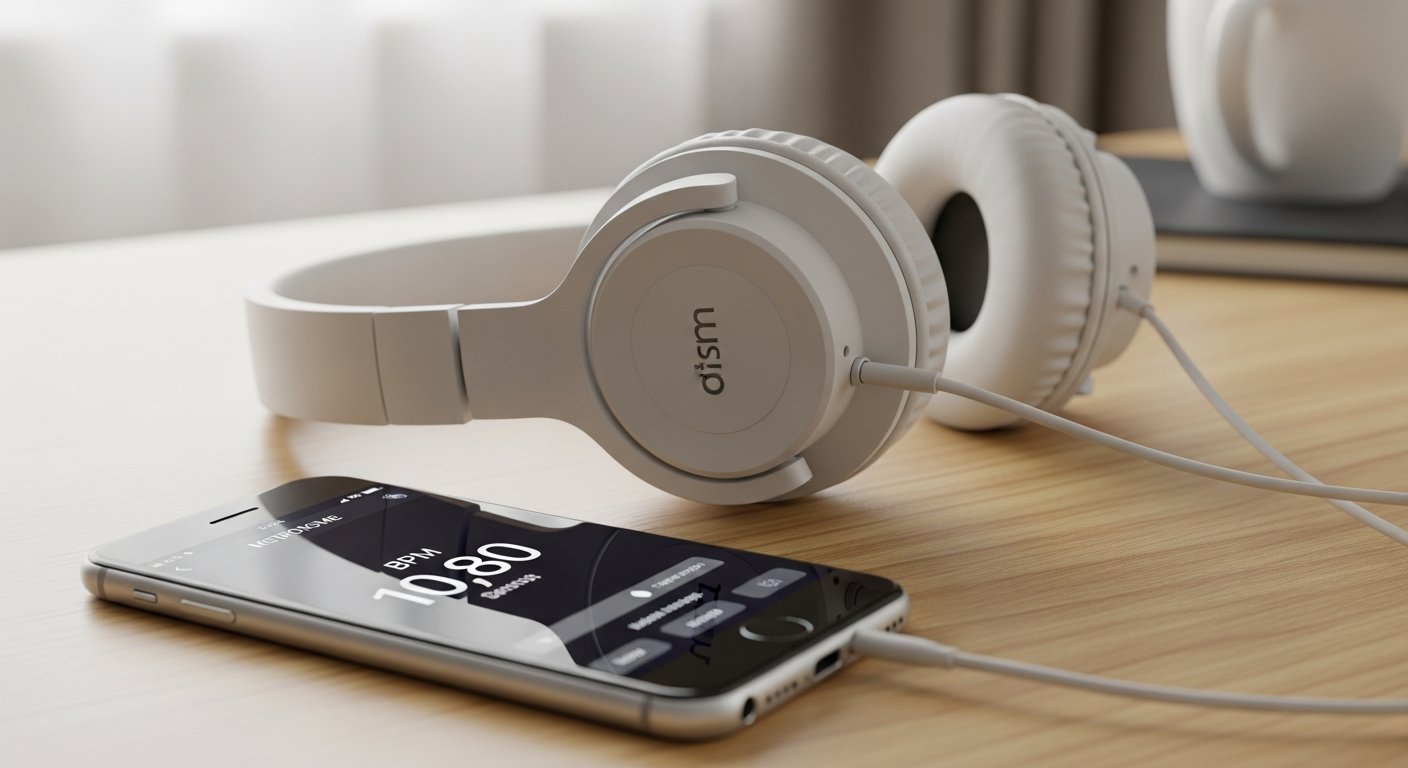
- A metronome provides a pure, unambiguous temporal cue without lyrical or melodic distractions, which can be more effective for severe freezing or when cognitive overload is a concern. (Source: ASHA, Current Guidelines)
- Music can be more engaging and motivating, potentially improving mood and exercise duration. The best music for RAS has a very clear, predictable rhythm between 100 and 120 beats per minute (BPM). (Source: APTA, Current Guidelines)
- The choice depends on the individual. Some find a metronome clinical and irritating, while others find music distracting. The goal is a consistent, clear beat; the delivery method is secondary. (Source: MJFF, Current Guidelines)
💡 What You Can Do Today: Create a 5-song 'Anti-Freezing' playlist on your phone or music player. Search for '110 BPM songs.' Examples include 'Billie Jean' by Michael Jackson or 'Another One Bites the Dust' by Queen. Test which type of sound your loved one responds to best when they are not frozen.
Does your loved one freeze mid-stride and nothing you do seems to unblock them?
You don't have to face this alone.
Request a Call
Which Auditory Cueing Tool Should You Try First?
| Tool | Best For | Key Advantage | Potential Downside |
|---|
| Metronome App | Severe or frequent freezing | Pure, unambiguous beat | Can feel clinical or annoying |
| Rhythmic Music | Milder freezing, exercise motivation | More engaging & mood-lifting | Lyrics/melody can be distracting |
| Formal RAS Therapy | Developing a personalized program | Expert guidance & training | Requires referral and appointment |
Why RAS Works: Bypassing the Brain's 'Broken Gear'
According to research in the Journal of Neurologic Physical Therapy, Rhythmic Auditory Stimulation doesn't repair the damaged basal ganglia. Instead, it leverages a different brain network: the cerebello-thalamo-cortical pathway. [1] This network is typically used for learning new motor skills and is highly responsive to external sensory cues. The beat essentially tells this 'backup system' to take over, sending timing signals directly to the motor cortex and bypassing the neurological roadblock in the basal ganglia. This is why a simple sound can have such a profound and immediate effect on a symptom that seems purely physical.
RAS creates a neurological 'detour' around the part of the brain affected by Parkinson's.
How to Get a Formal RAS Therapy Referral
While you can use a metronome app at home, formal RAS is a specific therapy provided by a neurologic physical or music therapist. At your next appointment with the Movement Disorders Specialist, specifically document the frequency and location of freezing episodes (e.g., 'He freezes 5 times a day, mostly in doorways and when turning'). Formally request a referral for 'a physical therapy evaluation with a therapist certified in Rhythmic Auditory Stimulation.' This precise language helps ensure the referral is for a specialist trained in this technique, not just general PT. Always discuss this with the medical team to see if it's the right fit. (Source: APTA, Current Guidelines)
✅ Your Next Steps
Use this checklist to start today.
- ✅ Add to Prep PDF: Evaluate Rhythmic Auditory Stimulation (RAS) strategies for severe freezing of gait.
- ✅ Download a Metronome App: Install a free metronome app on your smartphone today and practice setting it to 100-120 BPM.
- ✅ Create a 'RAS Playlist': Build a short playlist of songs with a strong, clear beat between 100-120 BPM to test with your loved one.
- ✅ Document Freezing Episodes: Keep a log for one week noting when and where freezes occur to share with the neurologist and request a physical therapy referral.
- ✅ Join the Community: Attend a free Parkinsons.Community peer support session.
Clinical References
- Thaut MH, McIntosh GC, et al. Rhythmic auditory stimulation in gait training for Parkinson's disease patients. Mov Disord. 1996;11(2):193-200. PMID: 8684391.
- Ghai S, Ghai I, et al. Effect of rhythmic auditory cueing on parkinsonian gait: A systematic review and meta-analysis. Sci Rep. 2018;8(1):506. PMID: 29323122.
- Li KP, Zhang ZQ, et al. Effect of music-based movement therapy on the freezing of gait in patients with Parkinson's disease: A randomized controlled trial. Front Aging Neurosci. 2022;14:924784. PMID: 36337701.
- Lopes S, Marques S, et al. PARKinSOUND: Impact of participation in an orchestra in patients with Parkinson's disease. J Parkinsons Dis. 2025;15(8):1529-1534. PMID: 41042999.
- Dance for PD®. Research-backed dance and music classes for people living with Parkinson's disease. A program of Mark Morris Dance Group; 2001–2026.
⚠️ Medical & Legal Disclaimer: This article is for educational purposes only and does not constitute medical advice. Consult a Movement Disorders Specialist for evaluation of Freezing of gait and Rhythmic Auditory Stimulation (RAS). Parkinsons.Community provides educational navigation support only and does not perform clinical triage.
📞 When to Call 911: If you or your loved one experiences a medical emergency — difficulty breathing, loss of consciousness, a fall with injury, chest pain, or sudden severe confusion — call 911 immediately. The information on this page is educational and does not replace emergency medical services.
FREE MEMBER BENEFIT
Learn the Techniques That Actually Stop Freezing
Watching a loved one freeze is terrifying, and the fear of falling is constant. Our community connects you with other caregivers who have mastered these techniques.
Join Parkinsons.Community
Educational support only. Never medical triage.