Freezing & Falling
Stop Freezing at Home: High-Contrast Design for Parkinson’s
Updated
Need to know
Why Do Doorways Cause Freezing of Gait?
Quick answer
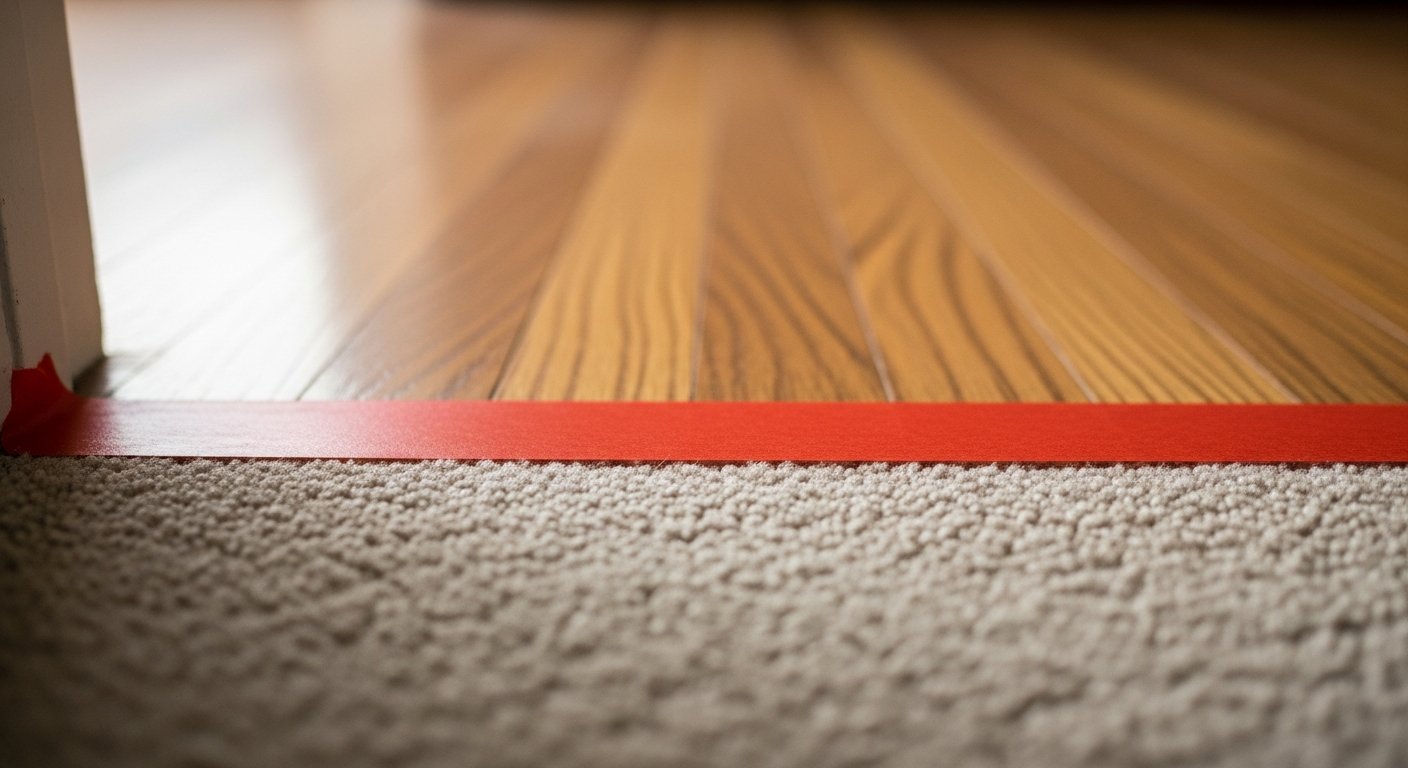
Threshold freezing occurs because the brain’s automatic walking program fails when processing visual transitions like doorways. The most effective intervention is creating high-contrast visual cues with colored tape on the floor, which works by giving the visual cortex an explicit target to step over. Start by placing a single strip of bright tape at the most problematic doorway.
In This Article
- Why Do Doorways Cause Freezing of Gait?
- Strategy 1: Use High-Contrast Lines to Override the Freeze
- Strategy 2: Eliminate Visually 'Noisy' Floors and Rugs
- Strategy 3: Transform Your Home into a 'Goal-Directed' Environment
- Beyond the Tape: How to Involve an Occupational Therapist
Unlocking the Next Step
When your loved one stops suddenly at a doorway, it's not a moment of defiance or confusion—it's a neurological traffic jam called threshold freezing. The brain's 'autopilot' for walking short-circuits when it tries to process a change in flooring, lighting, or space. As a caregiver, this is deeply frustrating and frightening, as it increases the risk of falls. This article provides simple, powerful environmental design strategies you can implement today to give their brain a new 'map' to follow, creating a safer and more predictable path. At Parkinsons.Community, we connect you with others who are navigating these same challenges.
3 Clinical Strategies
Reviewed against current clinical practice standards.
01A FRUSTRATING DAILY HURDLE
60%
Up to 60% of people with mid-stage Parkinson's experience freezing of gait, with doorways and other thresholds being a primary trigger. (Source: APDA, Current Guidelines)
For months, every doorway was a battle. My husband, David, would just stop, his feet glued to the floor. I'd plead, I'd get frustrated, and the tension was awful. One night after reading about visual cues, I put a single strip of bright red painter's tape across the floor of the three worst doorways. The next morning, he walked right over the first one without a second thought. He just needed a target. That simple roll of tape gave us back a sense of peace and safety we hadn't had in a year.
Clinical references
Medical & legal disclaimer. This protocol is general educational information. It is not medical advice and does not replace your care team. Always consult your neurologist before changing medications or care. In an emergency, call 911.