- Questions demand cognitive work (evaluation, decision, verbal response). For a brain with executive dysfunction, this is a barrier. Gentle, declarative statements remove this barrier.
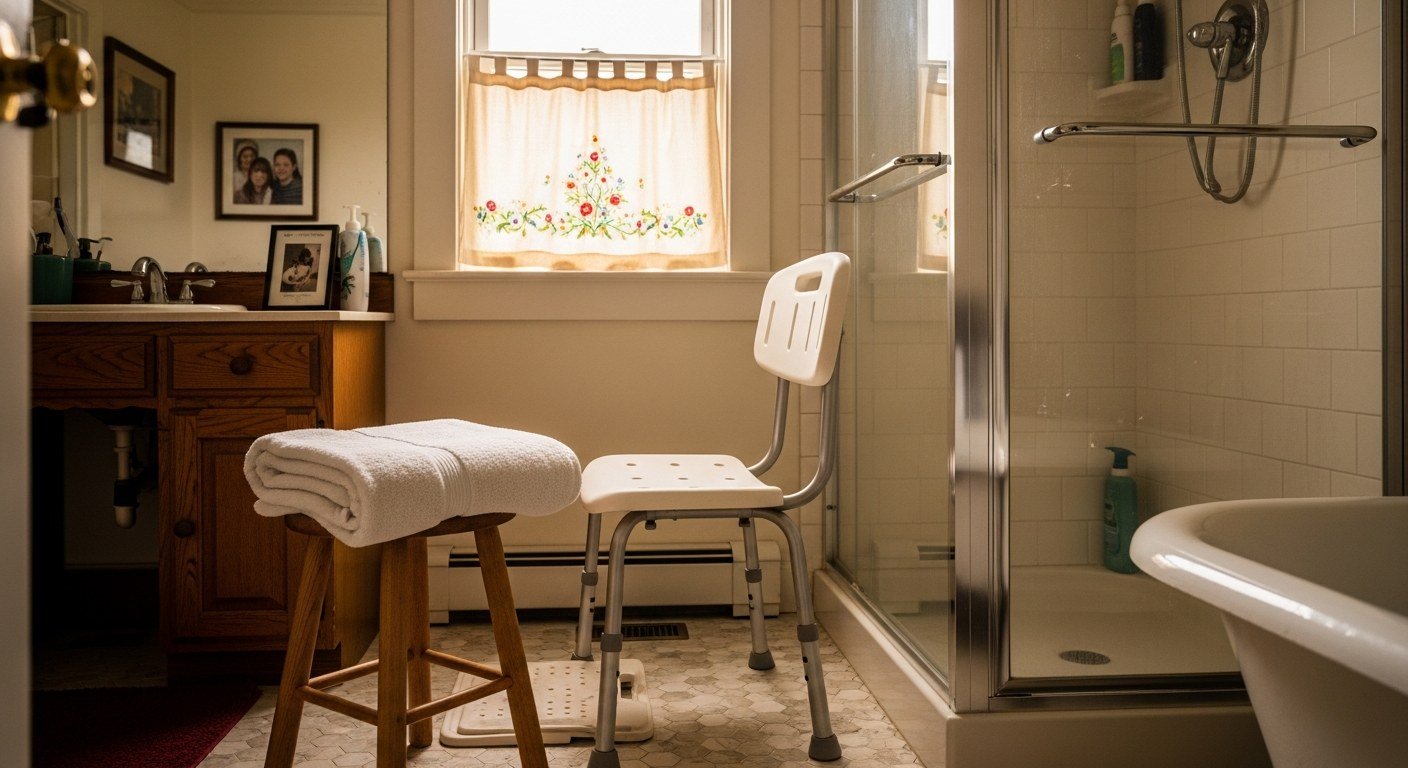
- Your tone is critical. The announcement should be warm, inviting, and matter-of-fact, not a command. 'The shower is warm and waiting for you' sounds supportive, while 'It's time for your shower' can feel like a demand.
- Pair the verbal cue with a physical one. After making the announcement, take a step toward the bathroom. This non-verbal cue helps the brain transition from inaction to action without requiring a verbal 'yes'.
💡 What You Can Do Today: For the next 24 hours, practice this shift. Instead of asking 'Are you hungry?' try 'Lunch is ready.' Instead of 'Do you want to get dressed?' say 'I've laid out your blue shirt.' Notice if the response becomes smoother and less resistant.
Has the daily battle over showering become one of the most exhausting and hurtful parts of your caregiving day?
You don't have to face this alone.
Request a Call
Which Approach Is Right for You?
| Approach | Best For | Time to Start | Cost |
|---|
| Environmental Pre-Completion | Caregivers managing PD-related apathy and executive dysfunction at home. | Immediate | Free |
| In-Home Aide Assistance | Situations with caregiver burnout or when significant physical help is needed for transfers. | Days to Weeks | $-$$$ |
| Occupational Therapy Assessment | Creating a long-term, professional strategy for all Activities of Daily Living (ADLs) and home safety. | Weeks to Months | Often covered by Medicare/insurance (rules and coverage vary by state and individual plan — consult a licensed professional or SHIP counselor). |
Is It Apathy or Depression? Understanding the Critical Difference
While they can coexist, apathy and depression are not the same, and distinguishing them is vital for getting the right help. Apathy is a disorder of motivation; the person lacks interest and spontaneity but is not necessarily sad. They might say, 'I know I should shower, I just can't get started.' Depression, however, is a mood disorder characterized by sadness, hopelessness, and feelings of guilt or worthlessness. A person with depression might say, 'What's the point of showering? I don't deserve to be clean.' Apathy is a 'wanting' problem, not a 'feeling sad' problem. Accurately describing these symptoms to your neurologist can lead to more effective management strategies. (Source: Michael J. Fox Foundation, Current Guidelines)
Apathy is a disorder of motivation, not mood. The person isn't sad; they are 'stuck'.
When to Request an Occupational Therapy ADL Assessment
If hygiene and other Activities of Daily Living (ADLs) like dressing and eating have become consistent struggles, it's time to ask the neurologist for an occupational therapy (OT) referral. An OT is a trained expert in helping people maintain independence and safety. They can perform a home assessment to identify specific barriers in the bathroom, kitchen, and bedroom. They will recommend adaptive equipment (like specialized shower chairs or dressing aids) and teach you and your loved one new, safer techniques to accomplish daily tasks. This professional guidance can reduce caregiver burden and restore a sense of dignity for the person with Parkinson's. Always discuss this with your medical team to see if an OT assessment is appropriate. (Source: APTA, Current Guidelines)
✅ Your Next Steps
Use this checklist to start today.
- ✅ Prep the Path: Use the 'Environmental Pre-Completion' method before the next scheduled shower time. Prepare everything before you say a word.
- ✅ Audit for Safety: Perform a visual audit of the bathroom. Are grab bars professionally anchored into studs? Is there a medical-grade shower chair?
- ✅ Change Your Language: For the next 24 hours, consciously replace all hygiene-related questions with gentle, declarative statements and observe the response.
- ✅ Prep for the Neurologist: Write this down for the next appointment: 'Discuss apathy versus depression and evaluate whether an occupational therapist home assessment for ADL assistance is appropriate.'
- ✅ Join the Community: Attend a free Parkinsons.Community peer support session to share strategies with other caregivers.
Clinical References
- Cummings J, Lanctot K, et al. Progress in Pharmacologic Management of Neuropsychiatric Syndromes in Neurodegenerative Disorders: A Review. JAMA Neurol. 2024;81(6):645-653. PMID: 38558015.
- Taximaimaiti R, Luo X, et al. Pharmacological and Non-pharmacological Treatments of Sleep Disorders in Parkinson's Disease. Curr Neuropharmacol. 2021;19(12):2233-2249. PMID: 33998990.
⚠️ Medical & Legal Disclaimer: This article is for educational purposes only and does not constitute medical advice. Consult a Movement Disorders Specialist for evaluation of Hygiene Refusal from Apathy and Executive Dysfunction (Not Behavioral Stubbornness). Parkinsons.Community provides educational navigation support only and does not perform clinical triage.
📞 When to Call 911: If you or your loved one experiences a medical emergency — difficulty breathing, loss of consciousness, a fall with injury, chest pain, or sudden severe confusion — call 911 immediately. The information on this page is educational and does not replace emergency medical services.
FREE MEMBER BENEFIT
End the Daily Battle — With Brain Science, Not Willpower
You're not facing a behavioral problem; you're facing a brain-based symptom. Connect with other caregivers who have learned these strategies and found peace in their daily routines.
Sign Up For Webinars
Educational support only. Never medical triage.