LiveArticle lifecycle: Live
Hospital & ER
MRI Scans and DBS: Preventing Lethal Brain Heating
Updated
Need to know
How to Verify Your DBS Device’s MRI Compatibility
Quick answer
DBS MRI burn risk occurs because the MRI’s magnetic fields can superheat the implanted electrode wires. The most effective intervention is engaging the device’s MRI-Safe mode, which works by disabling the device’s receiver circuits to prevent heating. Halt any unverified MRI procedure immediately.
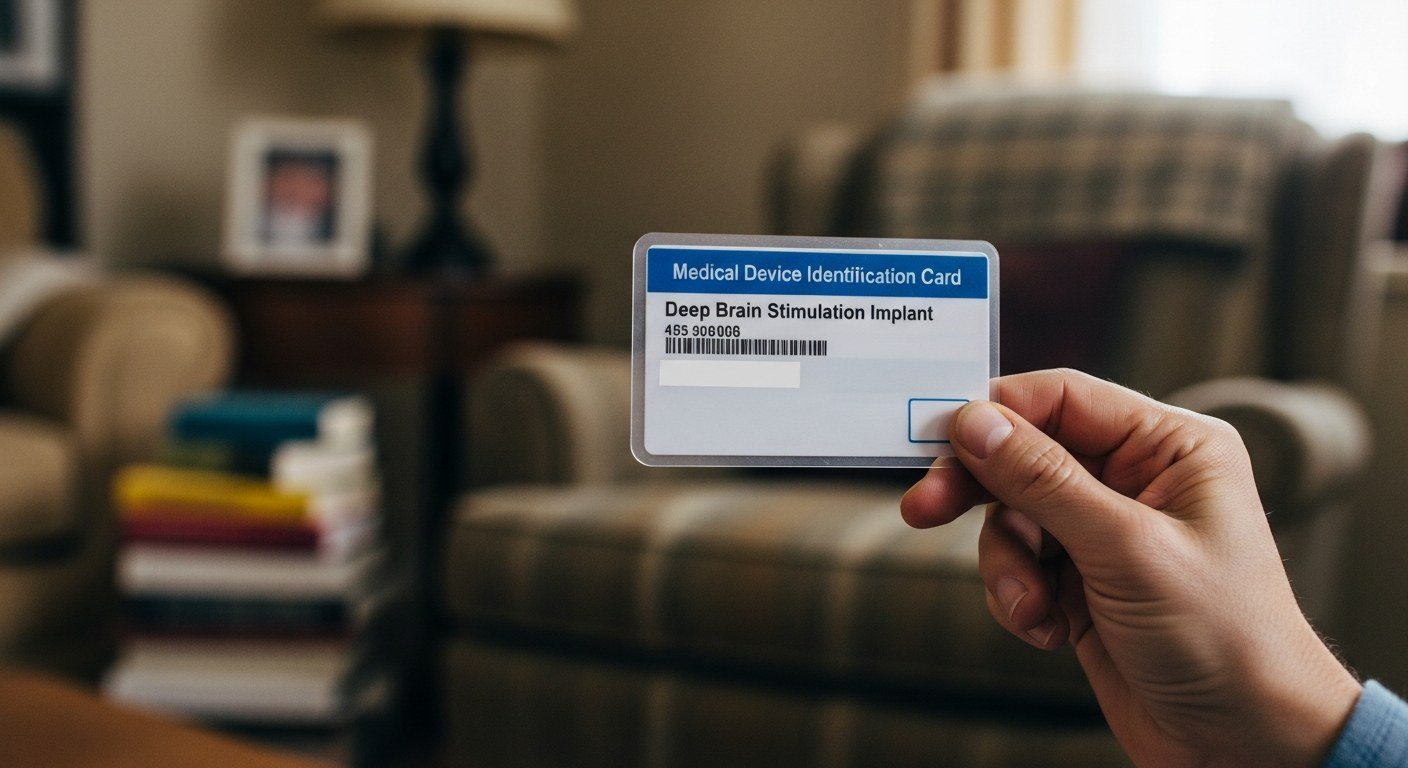
✓ Reviewed for Clinical Accuracy Content cross-referenced against current MDS, AAN, and NINDS clinical guidelines · May 2026 Need to Know A patient with a DBS should never undergo an MRI unless a representative from the device manufacturer (e.g., Medtronic, Abbott, Boston Scientific) has physically placed the system into its MRI-safe mode. ⚡ Quick Answer DBS MRI burn risk occurs because the MRI’s magnetic fields can superheat the implanted electrode wires. The most effective intervention is engaging the device’s MRI-Safe mode, which works by disabling the device’s receiver circuits to prevent heating. Halt any unverified MRI procedure immediately. Clinical References PubMed PubMed Central (PMC) In This Article How to Verify Your DBS Device’s MRI Compatibility Why to Request Manufacturer Verification for Every Scan Building a Multi-Layered Alert System to Prevent Errors The Hidden Danger: Understanding Broken Leads and RF Heating How to Advocate for a Loved One in an Emergency An MRI: Lifesaver or Lethal Threat? For a person with a Deep Brain Stimulation (DBS) implant, an MRI scan presents a terrifying paradox. While it’s a powerful diagnostic tool, the immense magnetic forces can superheat the implanted wires, causing catastrophic and irreversible brain burns. The difference between a safe scan and a lethal injury is not the machine, but the protocol. As a caregiver, you are the final checkpoint. Understanding the risks, knowing the exact steps to take, and having the confidence to voice safety concerns and request a pause on a medical procedure are not just helpful—they are potentially life-saving. You are the guardian of this protocol, and this article is designed to help you feel prepared for that role. PROTOCOL IS EVERYTHING 99.9% Over 99.9% of MRI scans on patients with modern, MRI-conditional DBS systems are completed without thermal injury when strict pre-scan protocols are followed. (Data from major clinical studies and device manufacturers indicate this.) The ER tech was rolling the gurney toward the MRI suite. ‘It’s for the fall, we need to rule out a brain bleed,’ he said. But my husband has a DBS implant. I planted my feet in the doorway. ‘No,’ I said, my voice shaking but firm. ‘You will not scan him until the Abbott representative is physically here to put his device in safe mode. I don’t care if it takes all night. We are not risking a brain burn.’ The charge nurse’s face hardened, but I held up his implant card. 3 Clinical Strategies Reviewed against current clinical practice standards. 01 Strategy 01: Verify Your DBS Device’s MRI Compatibility Confirm the device status. Most modern DBS systems are ‘MRI-Conditional,’ not ‘MRI-Safe,’ meaning scans are only safe under very specific conditions. (Source: FDA Medical Device Safety, Current Guidelines) Understand the ‘conditions’: these include the MRI’s magnetic field strength (e.g., 1.5T vs. 3.0T), the specific body part being scanned, and limits on radiofrequency power, known as the Specific Absorption Rate (SAR). (Source: American College of Radiology, Current Edition) Know that many older DBS systems are ‘MRI-Unsafe,’ meaning an MRI is never an option. Alternative imaging like a CT scan must be used. (Source: Movement Disorder Society, Current Guidelines) 💡 What You Can Do Today: Locate your loved one’s DBS Implant Card. This card lists the manufacturer (e.g., Medtronic, Abbott, Boston Scientific), model, and serial number. Take a clear photo of the front and back with your phone. Email these photos to yourself and another family member with the subject ‘DBS IMPLANT INFO’ for easy searching in an emergency. 02 Strategy 02: Insist on Manufacturer Verification for Every Scan A manufacturer representative is required to place the device into its specific ‘MRI Mode’. This is not a simple on/off switch and requires proprietary software. (Source: American College of Radiology, Current Edition) The representative performs a ‘lead integrity check’ to ensure the implanted wires have no microscopic fractures, which could create dangerous hotspots during the scan. Hospital staff cannot perform this check. (Source: Journal of Neurosurgery, Current Literature) Never accept a radiology department’s assurance that they ‘scan DBS patients all the time.’ The protocol is device-specific, and the financial and legal liability for a burn can be immense if the manufacturer’s protocol is not followed exactly. (Source: Family Caregiver Alliance, Current Guidelines) 💡 What You Can Do Today: Create a new contact in your phone named ‘DBS MRI EMERGENCY’. In the notes field, add the manufacturer’s name and their 24/7 technical support or MRI hotline phone number. Find this number on the company’s website. Put this contact in your ‘Favorites’ so it’s visible on your lock screen. 03 Strategy 03: Build a Multi-Layered Alert System In an emergency, your loved one may be unable to communicate that they have a DBS implant. A medical alert bracelet or necklace explicitly stating ‘DBS IMPLANT – MRI DANGER’ is your first line of defense. (Source: APDA, Current Guidelines) Your loved one’s wallet card, provided by the manufacturer, is the key. Keep the original in their wallet and a high-quality color copy in your ‘go-bag’ with other medical papers. (Source: Parkinson’s Foundation, Current Guidelines) Ask the neurologist’s office to place a prominent, high-priority alert in your loved one’s electronic health record (EHR) flagging the MRI-conditional DBS implant and the required protocol. (Source: NINDS, Current Guidelines) 💡 What You Can Do Today: Take a bright red permanent marker and a 3×5 index card. Write in large block letters: ‘DBS IMPLANT – MRI REQUIRES MANUFACTURER REP. CALL [Company Name] at [24/7 Number]. POTENTIAL FOR BRAIN BURN.’ Place this card inside their primary wallet or purse, directly behind their driver’s license or ID. Has an emergency room ever tried to rush you into a decision about an MRI? You are the last line of defense; we can help you prepare. Sign Up For Webinars Understanding Your Device’s MRI Status Device Status What It Means Action Required for MRI Risk Level Without Protocol MRI-Unsafe Older devices not designed for any MRI fields. MRI is forbidden. Alternative imaging (CT scan) must be used. Extreme / Lethal MRI-Conditional (Full Body) Device is safe for MRI under specific, controlled conditions. Manufacturer rep must verify leads and program device into safe mode. High MRI-Conditional (Head Only) Device is safe for head-only MRI under specific conditions. Same as full-body, but scanning of the torso or limbs is forbidden. High The Hidden Danger: Broken Leads and Radiofrequency ‘Antennas’ One of the most significant, and least understood, risks is radiofrequency (RF) heating. An MRI doesn’t just use a static magnet; it uses RF pulses to create the image. These pulses can be absorbed by the DBS wires, generating heat. A tiny, unseen fracture in a lead wire—something that doesn’t even affect the DBS therapy—can create a ‘resonant antenna’ at a specific RF frequency. According to the Journal of Neurosurgery, this can cause a dramatic temperature spike at the electrode tip, leading to a thermal lesion even if the system’s main pulse generator is correctly programmed. This is a primary reason why a manufacturer representative must perform a ‘lead integrity’ test with specialized equipment before every single scan—it’s the only way to detect these invisible but potentially lethal faults. (Source: Journal of Neurosurgery, Current Literature) A system is only as safe as its weakest point; for DBS, this is often an undetected microscopic wire fracture. How to Talk to Your Neurologist BEFORE an Emergency Proactive planning is your best tool. At your next routine appointment with the Movement Disorder Specialist, formally state, ‘We would like to create an MRI emergency action plan.’ Use this discussion to confirm the exact manufacturer, model, and MRI status of the implant. Ask the physician to document this plan in the patient’s chart. Key questions include: ‘Can you ensure a prominent alert about the MRI-conditional DBS is placed in the electronic health record?’ and ‘Who is our designated clinical contact at [Abbott/Boston Scientific/Medtronic]?’ Discussing these points in a calm, non-emergency setting ensures everyone is prepared. Always consult your neurologist to develop a plan that is specific to your loved one’s device and medical history. ✅ Your Next Steps Use this checklist to start today. ✅ Identify Your Device: Locate the DBS implant card. Confirm the manufacturer and model number. Take a photo of it now. ✅ Program Your Phone: Create the ‘DBS MRI EMERGENCY’ contact with the manufacturer’s 24/7 support line. ✅ Create Physical Alerts: Make a handwritten warning card for the wallet and research a medical alert bracelet online. ✅ Schedule a Planning Talk: Add ‘Discuss MRI Action Plan’ to the agenda for the next routine neurologist visit. ✅ Join the Community: Attend a free Parkinsons.Community peer support session to share strategies with other caregivers. Clinical References PubMed PubMed Central (PMC) ⚠️ Medical & Legal Disclaimer: This article is for educational purposes only and does not constitute medical advice. Consult a Movement Disorders Specialist for evaluation of DBS MRI Burn Risk. Parkinsons.Community provides educational navigation support only and does not perform clinical triage. 🚨 When to Call 911: If your loved one experiences a fall with head injury, loss of consciousness, difficulty breathing, chest pain, severe confusion, or any life-threatening symptom — call 911 immediately. Do not wait. This information is educational and does not replace emergency services. FREE MEMBER BENEFIT Ensure Your Implant Safety Protocols Are Solid Advocating for a loved one in a busy ER is stressful and intimidating. Connecting with peers who have navigated this exact situation can give you the confidence and language to stand your ground and ensure safety. Call a Patient Advocate Educational support only. Never medical triage.
Clinical references
Medical & legal disclaimer. This protocol is general educational information. It is not medical advice and does not replace your care team. Always consult your neurologist before changing medications or care. In an emergency, call 911.