LiveArticle lifecycle: Live
Eating & Swallowing
Mastering the Kitchen: Adaptive Tools for Joyful Cooking
Updated
Need to know
What Are the Safest Cutting Tools for Tremors?
Quick answer
Fine motor loss from Parkinson’s, due to dopamine cell decline, often makes cooking unsafe or impossible. The most effective intervention is upgrading to weighted utensils, rocker knives, and automatic stirrers, which neutralize tremors and restore culinary independence instantly. Start by securing your cutting board.
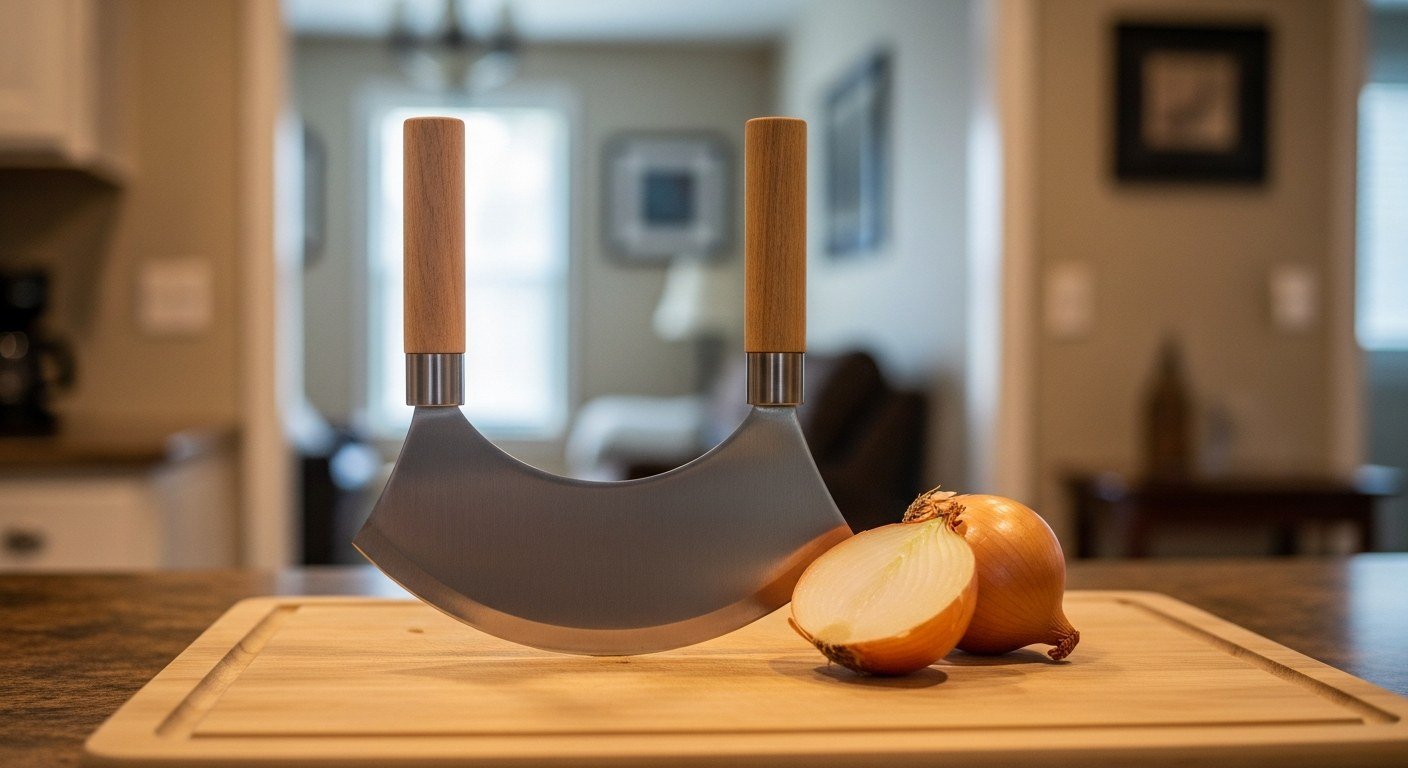
✓ Reviewed for Clinical Accuracy Content cross-referenced against current MDS, AAN, and NINDS clinical guidelines · May 2026 Need to Know It is strongly recommended to avoid using sharp chef’s knives if you experience active tremor. Consider swapping your cutting board for one with suction cups, or try placing a damp towel underneath it to stop it from sliding while preparing food. ⚡ Quick Answer Fine motor loss from Parkinson’s, due to dopamine cell decline, often makes cooking unsafe or impossible. The most effective intervention is upgrading to weighted utensils, rocker knives, and automatic stirrers, which neutralize tremors and restore culinary independence instantly. Start by securing your cutting board. Clinical References American Occupational Therapy Association Parkinson's Foundation Journal of Occupational Therapy In This Article What Are the Safest Cutting Tools for Tremors? How Can I Modify My Kitchen to Reduce Fatigue and Fall Risk? How Can Cooking Help Fight Parkinson’s Apathy? Choosing the Right Adaptive Kitchen Tools How Medication Timing Impacts Kitchen Safety More Than a Meal: Cooking with Confidence Losing the dexterity for chopping, stirring, and plating can feel like losing a part of yourself. Fine motor control, governed by dopamine, is one of the first casualties of Parkinson’s, turning a beloved hobby into a source of frustration and risk. But this does not have to be the end of your culinary journey. By embracing adaptive tools and smart strategies, you can safely and joyfully continue creating in the kitchen. You are not just managing a symptom; you are reclaiming an essential source of creativity, connection, and independence. Let’s explore how. A RECOVERABLE SKILL 93% of occupational therapists report that adaptive tools significantly improve client safety and independence in daily tasks like cooking (Source: American Occupational Therapy Association). He loved making Sunday dinners for the family, but his tremors made chopping vegetables feel reckless. He was about to hang up his apron for good. After his daughter found a high-contrast cutting board with food spikes and a rocker knife, everything changed. He could safely prep ingredients again, without fear or frustration. Now, he’s back in his kitchen, teaching his grandkids his secret pasta sauce recipe. 3 Clinical Strategies Reviewed against current clinical practice standards. 01 Strategy 01: What Are the Safest Cutting Tools for Tremors? Traditional chef’s knives require fine motor precision and strength, increasing the danger of accidents when tremors or bradykinesia are present. (Source: NINDS, Current Guidelines) Rocker knives use a downward pressing motion rather than a slicing motion, which leverages larger muscle groups in the arm and shoulder, bypassing the need for fine finger control. (Source: MJFF, Current Guidelines) According to the American Occupational Therapy Association, ‘Adaptive culinary equipment, such as rocker knives and weighted utensils, effectively bypass fine-motor deficits and significantly reduce the risk of laceration injuries.’ [1] 💡 What You Can Do Today: Tonight, place a damp cloth or a piece of non-slip shelf liner under your current cutting board. This simple, free modification will prevent it from sliding, providing a more stable and safer surface for any preparation. 02 Strategy 02: How Can I Modify My Kitchen to Reduce Fatigue and Fall Risk? Prolonged standing while concentrating on a motor-intensive task like cooking can increase fatigue and postural instability, elevating fall risk. (Source: APDA, Current Guidelines) The Parkinson’s Foundation states, ‘Modifying the kitchen environment to include seated prep stations conserves critical energy budgets and mitigates the high fall risk associated with prolonged standing.’ [2] Organize your kitchen by placing frequently used tools and ingredients between hip and shoulder height to minimize bending, reaching, and the associated energy cost. (Source: Family Caregiver Alliance, Current Guidelines) 💡 What You Can Do Today: Choose one countertop area and designate it as your seated prep station. Pull up a comfortable, stable bar stool or chair. Move your primary cutting board and knife block to this area so it becomes your default workspace. 03 Strategy 03: How Can Cooking Help Fight Parkinson’s Apathy? Apathy, a common non-motor symptom of Parkinson’s, is characterized by a loss of motivation for goal-oriented activities, which can include cooking. (Source: MDS, Current Guidelines) The Journal of Occupational Therapy finds that, ‘Restoring independence in cherished Instrumental Activities of Daily Living (IADLs), like cooking, provides profound psychological benefits and combats clinical apathy.’ [3] Engaging in a structured, multi-step creative process like preparing a meal can activate the brain’s reward circuits, providing a sense of accomplishment and purpose. (Source: NIA, Current Guidelines) 💡 What You Can Do Today: Choose one simple, low-effort food you love (e.g., a smoothie, a sandwich, or pre-made soup). Focus only on the act of preparing and enjoying it for yourself today. The goal is a small, personal win. Have you stopped making your favorite meals because chopping is too difficult or standing is too tiring? You don’t have to give up the activities you love. We can help. Request a Call Which Adaptive Cooking Approach Is Right for You? Approach Best For Time to Start Typical Cost Low-Tech Adaptive Tools Mild to moderate tremors; preserving the physical act of cooking. Immediate (once purchased) $20 – $100 High-Tech Kitchen Gadgets Significant tremor or fatigue; prioritizing speed and safety over manual process. Immediate (once purchased) $50 – $300+ Task & Environment Modification Those concerned with falls, fatigue, or who want to use existing tools more safely. Same Day Free The Neuroscience of Weighted Utensils It’s a common misconception that weighted utensils work simply by being too heavy for a tremor to move. The actual mechanism is more sophisticated. The added weight increases the proprioceptive input—the sense of self-movement and body position—from your hand to your brain. This enhanced sensory feedback helps the brain’s motor cortex better track the limb’s position in space. According to the American Neurological Association, this can help to quiet the faulty neural signals that generate tremor, resulting in smoother, more controlled movements rather than simply overpowering the tremor with mass. This principle is why these tools can be effective even for tremors with significant amplitude. It’s not about brute force; it’s about clearer communication between your hand and your brain. Ergonomics and ‘ON’ Times: Aligning Your Cooking with Your Medication For maximum safety and enjoyment in the kitchen, timing is everything. Plan your cooking and prep work for when your Parkinson’s medications are most effective, often called your ‘ON’ time. This is when your motor symptoms, like tremor and stiffness, are best controlled. Tasks requiring the most dexterity, such as chopping or peeling, should be prioritized during this window. Simpler tasks, like gathering ingredients or using an automatic mixer, can be done as medication effects begin to wane. Always discuss your medication schedule and its effectiveness with your neurologist; never make adjustments on your own. An occupational therapist can help you design a kitchen workflow that syncs with your personal energy and medication cycles. ✅ Your Next Steps Use this checklist to start today. ✅ Add to Prep PDF: Request an Occupational Therapy consult for adaptive kitchen tools and meal-prep safety strategies. ✅ Secure Your Workspace: Place a damp towel or non-slip mat under your cutting board to prevent it from sliding. ✅ Analyze Your ‘ON’ Times: Track your motor function for a few days to identify when your dexterity is at its peak. Plan complex cooking tasks for these windows, but consult your neurologist before modifying any medication schedule. ✅ Start with One Tool: Invest in one high-impact adaptive tool, like a rocker knife or weighted utensils, to see the immediate benefit. ✅ Join the Community: Attend a free Parkinsons.Community peer support session to share tips and recipes with others facing similar challenges. Clinical References American Occupational Therapy Association Parkinson's Foundation Journal of Occupational Therapy ⚠️ Medical & Legal Disclaimer: This article is for educational purposes only and does not constitute medical advice. Consult a Movement Disorders Specialist for evaluation of Fine Motor Loss. Parkinsons.Community provides educational navigation support only and does not perform clinical triage. 📞 When to Call 911: If you or your loved one experiences a medical emergency — difficulty breathing, loss of consciousness, a fall with injury, chest pain, or sudden severe confusion — call 911 immediately. The information on this page is educational and does not replace emergency medical services. FREE MEMBER BENEFIT Reclaim Your Kitchen Losing confidence in the kitchen can be isolating. Connect with a community that understands and get practical advice from peers who have found ways to keep cooking. Join Parkinsons.Community Educational support only. Never medical triage.
Medical & legal disclaimer. This protocol is general educational information. It is not medical advice and does not replace your care team. Always consult your neurologist before changing medications or care. In an emergency, call 911.