- The primary goal is preventing more mini-strokes. Treatment and "secondary prevention focuses strictly on aggressive management of cardiovascular risk factors, including hypertension and hyperlipidemia." [3]
- This means the most effective 'treatment' for Vascular Parkinsonism is managed by your primary care physician or cardiologist, not just your neurologist. (Source: AHA, Current Guidelines)
- Key areas of focus are controlling high blood pressure, managing cholesterol and blood sugar, stopping smoking, and maintaining a heart-healthy diet. (Source: CDC, Current Guidelines)
💡 What You Can Do Today: If you have a home blood pressure cuff, take a reading right now and write it down. If you don't, many pharmacies offer free checks. Knowing this number is the most critical first step in protecting your brain from further damage.
Does this sound familiar? A history of high blood pressure, walking problems getting worse, and levodopa doing nothing to help?
You don't have to face this diagnostic uncertainty alone.
Request a Call
Vascular Parkinsonism vs. Idiopathic Parkinson's Disease
| Symptom / Feature | Idiopathic Parkinson's (PD) | Vascular Parkinsonism (VP) |
|---|
| Primary Cause | Loss of dopamine-producing cells | Brain damage from multiple small strokes |
| Key Symptoms | Resting tremor, stiffness, slow movement (often starts in one arm) | Shuffling gait, freezing, balance problems (primarily lower body) |
| Symmetry | Asymmetrical (starts on one side of the body) | Symmetrical (affects both legs about equally) |
| Levodopa Response | Typically good, especially in early stages | Poor or no response |
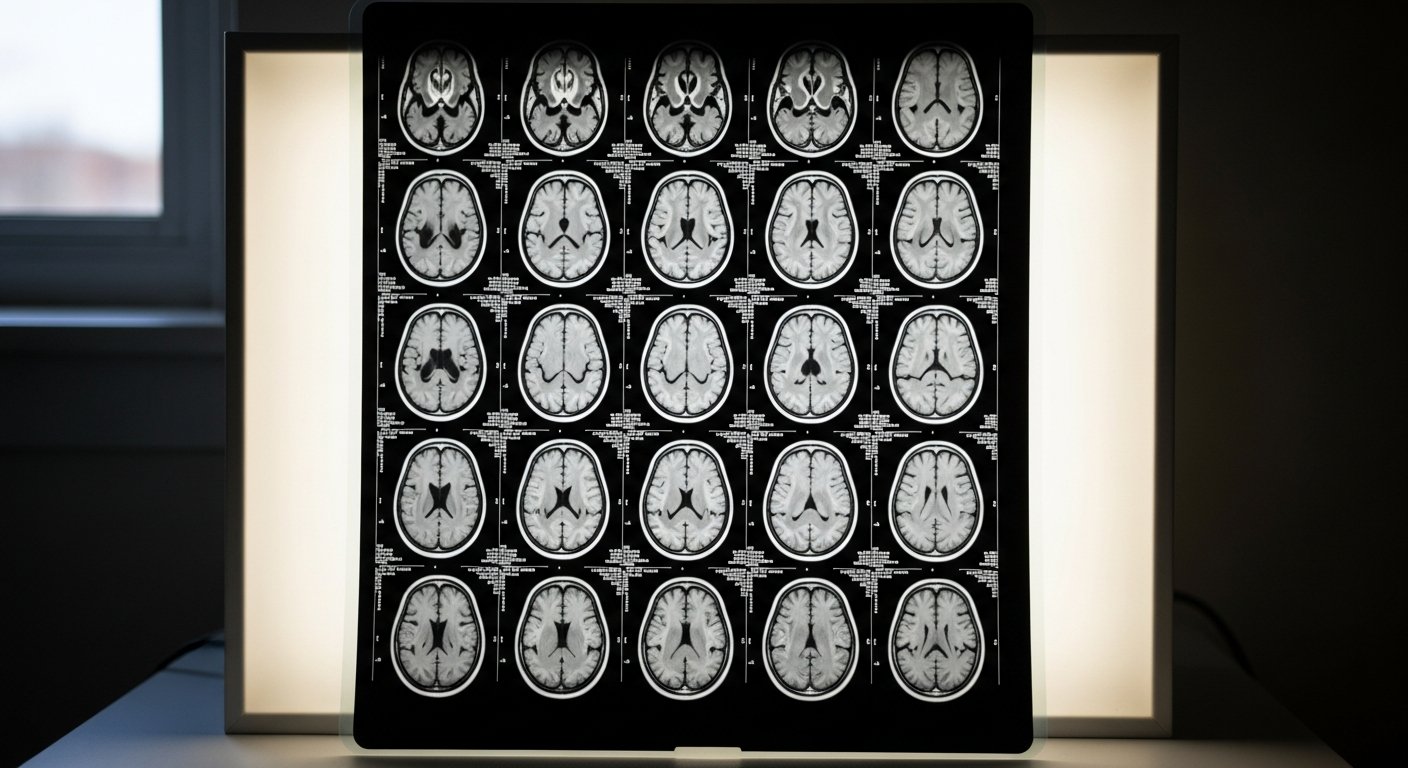
| Brain MRI Scan | Usually appears normal for age | Shows white matter changes or evidence of strokes |
The 'Higher-Level' Gait Disorder: Why the Brain's Walking Program Fails
Vascular Parkinsonism is often called a 'higher-level' gait disorder. The problem isn't weak muscles or faulty nerves in the legs. Instead, the mini-strokes create a 'disconnection syndrome' by damaging the deep white matter pathways that connect the brain's frontal lobes (the 'command center') to the basal ganglia (the 'automatic movement center'). The command to 'walk' is sent, but the wiring to execute the smooth, coordinated program is damaged. This is why the feet can feel disconnected from the brain's intention, leading to the characteristic freezing and shuffling. (Source: MDS, Current Guidelines)
It’s not a problem with the 'engine' (muscles), but with the 'wiring' that tells the engine how to run smoothly.
How to Formally Request a Diagnostic Workup
To overcome appointment anxiety, walk in with a clear, prepared request. At your next visit, you can state: 'Doctor, my main symptoms are shuffling and freezing, I have no resting tremor, and levodopa has not improved my walking. Given my history of high blood pressure, I would like to formally request a brain MRI to investigate for Vascular Parkinsonism.' Having this scripted can help you advocate clearly. After the visit, send a follow-up message in the patient portal summarizing your request in writing. Your medical team can then determine the most appropriate diagnostic steps based on your full clinical picture.
✅ Your Next Steps
Use this checklist to start today.
- ✅ Add to Your Doctor Prep PDF: Request brain MRI to rule out Vascular Parkinsonism and white matter disease.
- ✅ Begin a Cardiovascular Log: Start a daily log of blood pressure and, if applicable, blood sugar readings. Bring this log to every neurology and primary care appointment.
- ✅ Document Your Gait Symptoms: Keep a specific log of gait freezing, shuffling, and falls. Note what you were doing at the time (e.g., turning, walking through a doorway) to identify triggers.
- ✅ Perform a Home Fall-Risk Audit: Immediately check your home for fall hazards like loose rugs, poor lighting in hallways, and cluttered pathways. Balance problems in VP significantly increase fall risk.
- ✅ Join the Community: Attend a free Parkinsons.Community peer support session to connect with others navigating an atypical parkinsonism diagnosis.
Clinical References
- Rektor I, Rektorová I, et al. Vascular parkinsonism--an update. J Neurol Sci. 2006;248(1-2):185-91. PMID: 16765989.
- Yuan L, Chen X, et al. CADASIL: A NOTCH3-associated cerebral small vessel disease. J Adv Res. 2024;66:223-235. PMID: 38176524.
- Tolosa E, Wenning G, et al. The diagnosis of Parkinson's disease. Lancet Neurol. 2006;5(1):75-86. PMID: 16361025.
⚠️ Medical & Legal Disclaimer: This article is for educational purposes only and does not constitute medical advice. Consult a Movement Disorders Specialist for evaluation of Vascular Parkinsonism. Parkinsons.Community provides educational navigation support only and does not perform clinical triage.
📞 When to Call 911: If you or your loved one experiences a medical emergency — difficulty breathing, loss of consciousness, a fall with injury, chest pain, or sudden severe confusion — call 911 immediately. The information on this page is educational and does not replace emergency medical services.
FREE MEMBER BENEFIT
Get Clarity and the Right Support
Receiving an atypical diagnosis like Vascular Parkinsonism can be isolating and confusing. Connect with peers who understand the challenges of finding a care plan that addresses the true cause of your symptoms.
Join Parkinsons.Community
Educational support only. Never medical triage.