- PSP is a 'tauopathy,' meaning it is caused by the abnormal accumulation of the tau protein in brain cells. Parkinson's is a 'synucleinopathy.' (Source: MJFF, Current Guidelines)
- The Movement Disorder Society notes that because PSP is a tauopathy, 'standard dopaminergic therapies (levodopa) [are] largely ineffective in restoring motor control.' [3]
- While a neurologist may still trial carbidopa-levodopa, lack of a significant or sustained response is a key clue pointing toward an atypical parkinsonism like PSP. Always discuss medication effectiveness and side effects with the prescribing physician before making any changes.
💡 What You Can Do Today: What You Can Do Today: Instead of just saying 'the medicine isn't working,' create a specific log. Write down: MEDICATION, DOSE/TIME, and a simple rating (1-5) of rigidity, balance, and mood for one hour after the dose. This data helps the doctor make informed decisions.
Has your loved one been falling backwards unexpectedly or struggling to look down?
You don't have to face this alone.
Request a Call
Choosing the Right Mobility Support for PSP
| Support Type | Best For | Key Consideration | Financial Stake |
|---|
| Standard Walker | NOT recommended for PSP | Patients with vertical gaze palsy cannot see the walker's legs, creating a severe tripping hazard. It can easily roll away during a backward fall. | Low initial cost, but can lead to falls with extremely high costs (hospitalization, surgery). |
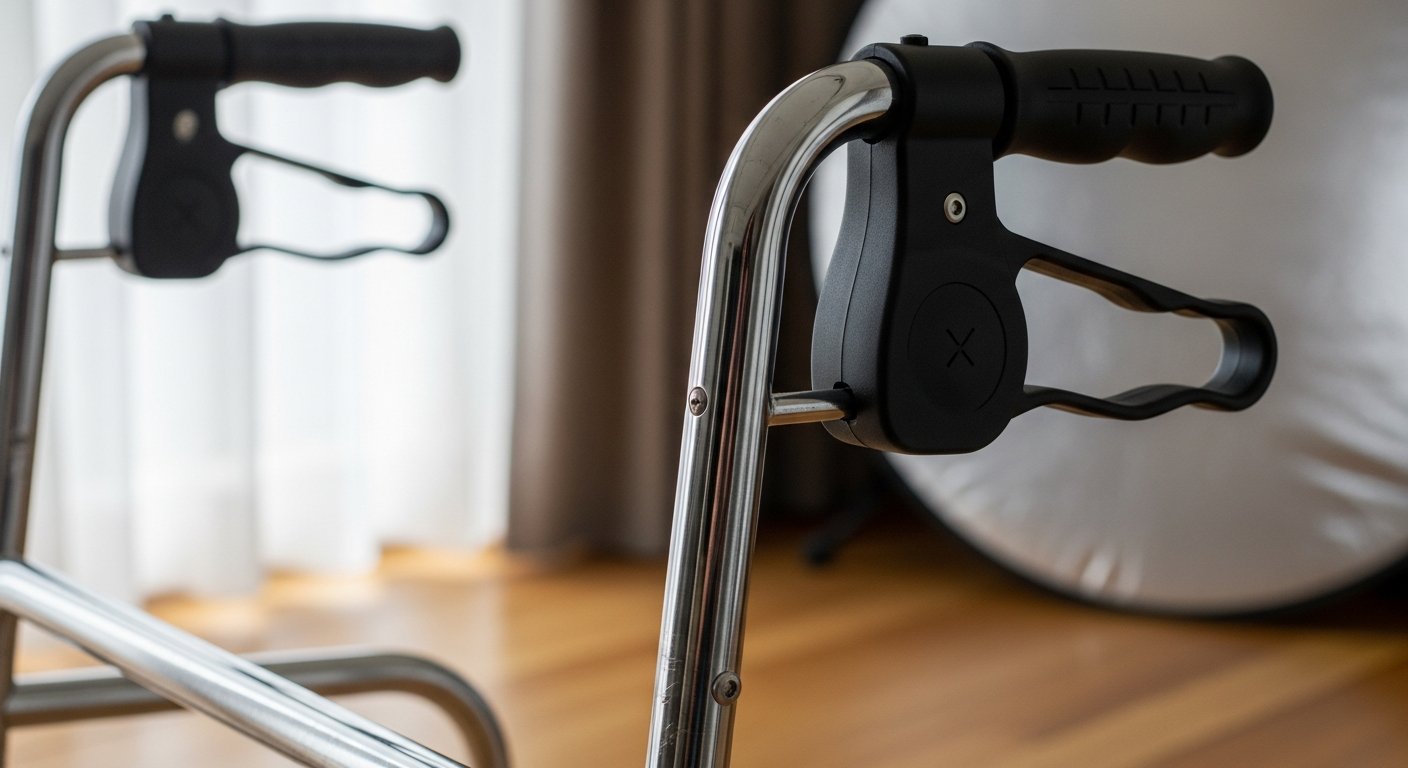
| U-Step Walker | The clinical standard for PSP | Reverse braking system stops it from rolling back. Laser and sound cues can help with gait freezing. Very stable U-shaped base. | Higher initial cost. A prescription and letter of medical necessity can help secure insurance coverage (coverage varies by state and plan). |
| Physical/Occupational Therapy | All diagnosed PSP patients | Therapists can teach specific compensatory strategies for transfers, walking, and stair navigation, and can trial different walkers. | Often covered by insurance, but may have session limits or copays. Essential for justifying durable medical equipment (DME) like a U-Step. |
The 'Astonished Look': Facial Changes Beyond Masking
While typical Parkinson's often causes facial 'masking' or a reduced expression, PSP can create a very different appearance. Due to a combination of axial rigidity in the facial muscles and difficulty with eye movement, individuals with PSP may develop a wide-eyed, 'astonished' or 'worried' expression. This is caused by involuntary contraction of the frontalis muscle (forehead). It is a neurological symptom, not an emotional one. According to the National Institute on Aging (NIA), this distinct facial expression, combined with the inability to make eye contact because of gaze palsy, can significantly impact social interaction and is an important diagnostic clue for clinicians to differentiate PSP from other conditions.
This 'stare' is a physical symptom of the disease, not a reflection of their mood or attention.
How to Formally Request an Atypical Parkinsonism Evaluation
If you are concerned about PSP, it is crucial to communicate your observations clearly to the neurologist. At your appointment, use specific language. Say, 'I would like to formally request an evaluation for atypical parkinsonism, specifically PSP.' Present your log of backward falls and, if possible, the video of their walking and turning. Point out your concerns about their eye movements, mentioning you've noticed they cannot look down to see their plate or their feet. If you feel your concerns are not being addressed, it is appropriate to say, 'Thank you for your opinion. Could you please document my specific concerns about backward falls and vertical gaze palsy in the visit notes? And could you provide a referral for a second opinion with a Movement Disorder Specialist?' This creates a formal record and a clear path forward.
✅ Your Next Steps
Use this checklist to start today.
- ✅ Add to Your Doctor Prep PDF: Add to Prep PDF: Request evaluation for atypical parkinsonism (PSP) due to vertical gaze palsy and backward falls.
- ✅ Document the Falls: Use a simple notebook to log every fall. Note the direction (backward), what they were doing, and whether they were able to brace themselves.
- ✅ Assess Home Safety for Gaze Palsy: Place high-contrast tape on the edge of every step and threshold. Use brightly colored placemats to help them locate their plate at mealtimes.
- ✅ Consult an Occupational Therapist (OT): Ask your neurologist for a referral to an OT who can perform a home safety evaluation and make specific recommendations for equipment like shower chairs and specialized walkers.
- ✅ Join the Community: Attend a free Parkinsons.Community peer support session.
Clinical References
- Coughlin DG, Litvan I. Progressive supranuclear palsy: Advances in diagnosis and management. Parkinsonism Relat Disord. 2020;73:105-116. PMID: 32487421.
- Levin J, Kurz A, et al. The Differential Diagnosis and Treatment of Atypical Parkinsonism. Dtsch Arztebl Int. 2016;113(5):61-9. PMID: 26900156.
- Levin J, Kurz A, et al. The Differential Diagnosis and Treatment of Atypical Parkinsonism. Dtsch Arztebl Int. 2016;113(5):61-9. PMID: 26900156.
⚠️ Medical & Legal Disclaimer: This article is for educational purposes only and does not constitute medical advice. Consult a Movement Disorders Specialist for evaluation of Progressive Supranuclear Palsy (PSP). Parkinsons.Community provides educational navigation support only and does not perform clinical triage.
📞 When to Call 911: If you or your loved one experiences a medical emergency — difficulty breathing, loss of consciousness, a fall with injury, chest pain, or sudden severe confusion — call 911 immediately. The information on this page is educational and does not replace emergency medical services.
FREE MEMBER BENEFIT
Connect With Others Navigating PSP
Caring for someone with PSP can feel isolating when standard Parkinson's advice doesn't apply. Connecting with other caregivers who understand the unique challenges of backward falls and gaze palsy provides both emotional relief and practical strategies.
Call a Patient Advocate
Educational support only. Never medical triage.