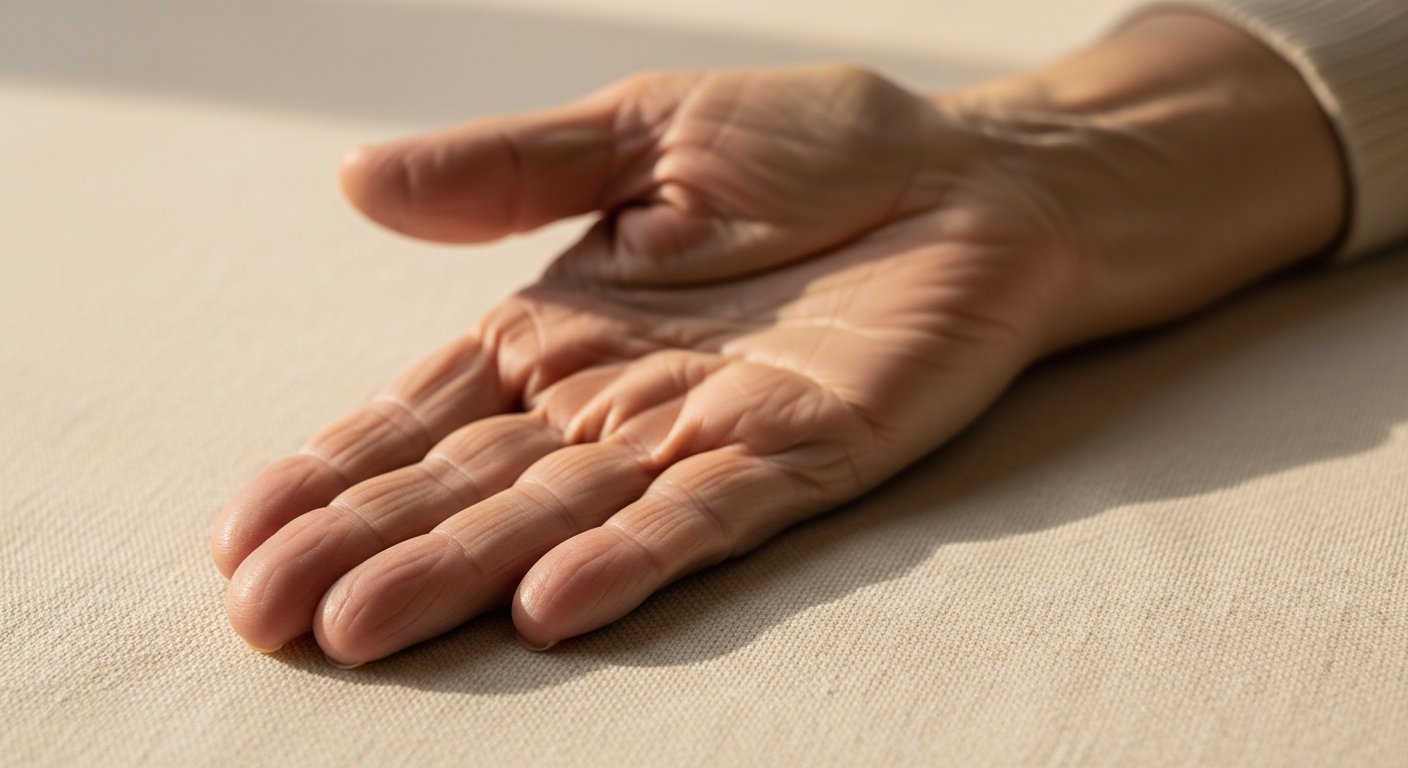
- Identify the primary 'danger zones' where the alien limb causes the most trouble, such as the dining table, bedside table, or bathroom counter. Clear unnecessary items from these surfaces (Source: APDA, Current Guidelines).
- Replace sharp or heavy objects with softer, lighter alternatives. For example, use plastic cups instead of glass, and remove heavy decorative items from tables your loved one frequently sits near (Source: Parkinson's Foundation, Current Guidelines).
- Communicate with family and visitors about the alien limb. Explaining that the hand moves on its own can prevent misunderstandings and help others react with patience and support instead of alarm (Source: MJFF, Current Guidelines).
💡 What You Can Do Today: What You Can Do Today: Take five minutes to scan the room your loved one spends the most time in. Move any unnecessary, fragile, or potentially sharp objects from the side of their alien limb to the other side of the room or put them away.
Does your loved one's hand seem to move or grab things on its own, without their intention?
You don't have to navigate these confusing symptoms alone.
Request a Call
Which Management Approach Is Right for Your Situation?
| Approach | Best For | Time to Start | Cost |
|---|
| Sensory Tools (Stress Ball, Fidgets) | Immediately calming the hand during specific tasks like eating or watching TV. | Immediate | Free to Low ($0-$15) |
| Environmental Modification | Preventing accidents and reducing daily frustration by removing triggers. | Same Day | Free |
| Occupational Therapy Consultation | Developing a personalized, long-term strategy for adapting tasks and maintaining function. | Weeks (Requires Referral) | Varies (Consult a licensed professional or SHIP counselor for insurance coverage details) |
The 'Drifting Limb': A Subtle Precursor to Alien Hand
Before the more dramatic 'alien' movements begin, some individuals with CBD experience a phenomenon known as 'limb levitation' or 'drifting.' The affected arm may slowly rise or drift into a new position without the person noticing. A caregiver might observe their loved one's arm floating upwards while they are focused on a conversation. According to the National Institute on Aging (NIA), this is due to a failure in proprioception—the brain's sense of where the body is in space. The brain literally 'forgets' where the arm is, allowing it to drift. Recognizing and reporting this subtle sign can provide a critical clue for neurologists working toward an accurate CBD diagnosis, distinguishing it from other parkinsonisms.
Observing an arm that seems to 'float' on its own is a key detail to report to your neurologist.
How to Request a CBD Evaluation for Asymmetric Symptoms
When you see the neurologist, clearly state your concerns about atypical parkinsonism. Use specific language. For instance, say: 'I'm concerned about Corticobasal Degeneration because the stiffness and strange movements are almost entirely on the left side.' Describe the alien limb's actions: 'The left hand unbuttons shirts while the right hand is trying to button them.' According to the AAN, this extreme asymmetry and limb interference are classic signs. Formally request an evaluation for CBD or other atypical parkinsonisms. A Movement Disorders Specialist can best differentiate these complex conditions. Never adjust medications or therapies without direct guidance from your prescribing physician.
✅ Your Next Steps
Use this checklist to start today.
- ✅ Add to Prep PDF: Address severe limb asymmetry and apraxia indicative of Corticobasal Degeneration.
- ✅ Start an 'Action Log': Use your phone to log specific actions of the alien limb. Note what it grabs, when it moves, and what tasks it interferes with. This data is invaluable for the doctor.
- ✅ Record a Short Video: With your loved one's full permission, safely record a short video of the alien hand's involuntary movements to show the neurologist during your next appointment.
- ✅ Adapt One Daily Task: Choose one task, like brushing teeth, and simplify it. Lay out only the toothbrush with paste already on it to minimize the chance of the alien hand grabbing other items.
- ✅ Join the Community: Attend a free Parkinsons.Community peer support session to connect with other caregivers navigating similar challenges.
Clinical References
- Vertes AC, Beato MR, et al. Parkinson-Plus Syndrome. . 2026. PMID: 36256760.
- Levin J, Kurz A, et al. The Differential Diagnosis and Treatment of Atypical Parkinsonism. Dtsch Arztebl Int. 2016;113(5):61-9. PMID: 26900156.
- Saranza GM, Whitwell JL, et al. Corticobasal degeneration. Int Rev Neurobiol. 2019;149:87-136. PMID: 31779825.
⚠️ Medical & Legal Disclaimer: This article is for educational purposes only and does not constitute medical advice. Consult a Movement Disorders Specialist for evaluation of Corticobasal Degeneration (CBD) alien limb. Parkinsons.Community provides educational navigation support only and does not perform clinical triage.
📞 When to Call 911: If you or your loved one experiences a medical emergency — difficulty breathing, loss of consciousness, a fall with injury, chest pain, or sudden severe confusion — call 911 immediately. The information on this page is educational and does not replace emergency medical services.
FREE MEMBER BENEFIT
Find Others Navigating CBD
Caring for someone with a symptom as strange as alien limb can feel incredibly isolating. Connect with a community that understands the frustration, fear, and even the moments of dark humor.
Join Parkinsons.Community
Educational support only. Never medical triage.