LiveArticle lifecycle: Live
Pain & Stiffness
Adaptive Golf for Parkinson’s: Swinging Through Rigidity
Updated
Need to know
Why a Golf Swing Counteracts Trunk Stiffness
Quick answer
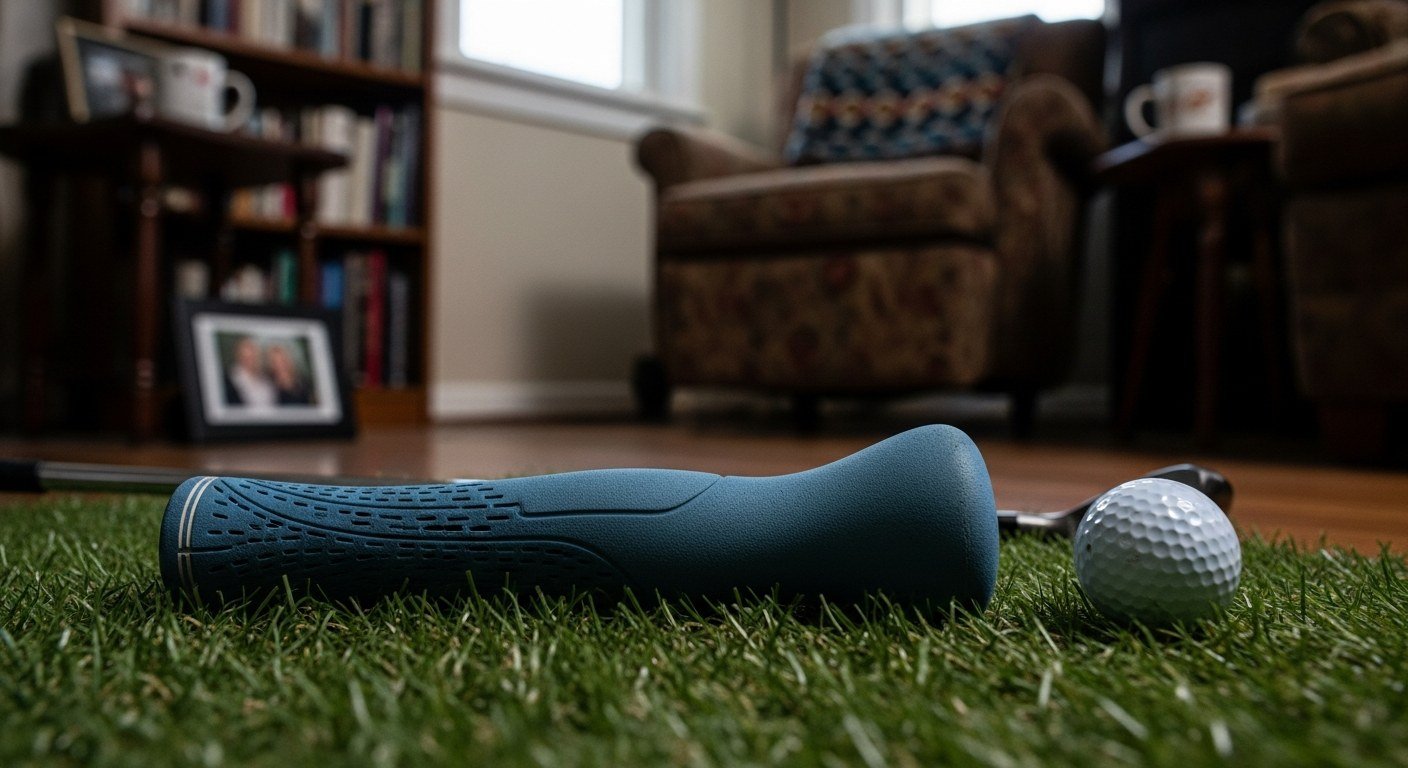
Trunk flexibility and balance improve because the golf swing forces the body to execute a massive, coordinated rotational movement. The most effective intervention is Adaptive Golf—using oversized grips and modified stances—allowing patients to retain a highly social, physically beneficial outdoor hobby safely.
✓ Reviewed for Clinical Accuracy Content cross-referenced against current MDS, AAN, and NINDS clinical guidelines · May 2026 Need to Know You can practice the core movement safely at home. Sit securely in a dining chair. Holding a broomstick (or invisible club) horizontally across your chest, slowly and deliberately twist your torso to the left, then the right, stretching the spine. ⚡ Quick Answer Trunk flexibility and balance improve because the golf swing forces the body to execute a massive, coordinated rotational movement. The most effective intervention is Adaptive Golf—using oversized grips and modified stances—allowing patients to retain a highly social, physically beneficial outdoor hobby safely. Clinical References American Physical Therapy Association PGA HOPE (Adaptive Golf) Movement Disorder Society In This Article Why a Golf Swing Counteracts Trunk Stiffness Adapting Your Grip and Stance for Stability The Social and Mental Boost of Being on the Green The Neuroscience of Rotation: More Than Just a Game Comparing Your Options: From Home Practice to the Fairway Reclaim Your Swing from Parkinson’s Rigidity Axial rigidity, the stiffness in your torso and neck, can make simple turns feel like moving through cement. It’s a core symptom of Parkinson’s that robs you of fluid motion and can lead to balance problems. But what if the solution was an activity you already love? A golf swing is a powerful, full-body rotation that directly challenges this rigidity, promoting spinal flexibility and coordination. This isn’t just about exercise; it’s about reclaiming a passion and connecting with a community that understands. Many people with Parkinson’s find that adaptive sports are a key to maintaining independence and joy. A CORE PD SYMPTOM >60% of people with Parkinson’s report experiencing rigidity, which often affects the trunk (axial rigidity), limiting rotational movement and impacting balance. (Source: Parkinson’s Foundation, Current Guidelines) John thought his golfing days were over. The stiffness in his back made a full swing feel impossible, and his worsening balance made him a fall risk on uneven turf. He felt he was losing not just a hobby, but his weekly camaraderie with friends. After a physical therapist recommended an adaptive golf program, he learned a modified, wider stance and switched to oversized club grips. Now, he’s back on the course, enjoying the game safely and proving to himself that Parkinson’s doesn’t get the final say. 3 Clinical Strategies Reviewed against current clinical practice standards. 01 How Can a Golf Swing Improve Trunk Flexibility? The primary challenge of axial rigidity is the loss of spinal rotation. A golf swing is a large-amplitude, whole-body rotational movement that directly targets this deficit. (Source: APTA, Current Guidelines) The biomechanical rotation of a golf swing directly counteracts Parkinsonian axial rigidity, forcing the multi-planar spinal mobility frequently lost in the disease. [1] Consistent practice helps create new neural pathways for coordinated movement, improving the brain’s ability to initiate and control rotation not just on the course, but in daily life. (Source: NINDS, Current Guidelines) 💡 What You Can Do Today: Sit securely in a chair with your feet flat. Without a club, practice slowly twisting your torso as if in a backswing, hold for a few seconds, and then rotate through as if in a follow-through. Focus on the feeling of stretching your core. 02 What Equipment and Stance Changes Make Golf Safer? Coordination and stability issues in PD increase the risk of falls. Simple adaptations can create a safer, more effective swing. (Source: MJFF, Current Guidelines) Ergonomic modifications, such as oversized grips and widened base-of-support stances, successfully mitigate fine-motor tremors and postural instability on the course. [2] A wider stance lowers your center of gravity and increases your base of support, making you more stable throughout the swing, a key adaptation for anyone with PD-related balance concerns. (Source: Parkinson’s Foundation, Current Guidelines) 💡 What You Can Do Today: Stand in your living room. Practice setting up in a normal golf stance, then gradually widen your feet by a few inches. Feel how much more stable you are. This wider base is your new foundation. 03 Beyond the Physical: Why Is Golf Good for PD Morale? Engagement in socially inclusive, outdoor recreational sports provides a vital psychological buffer against depression while satisfying the mandate for complex aerobic exercise. [3] The cognitive demands of golf—calculating distances, choosing clubs, and strategizing shots—provide valuable mental exercise that challenges executive function. (Source: NIA, Current Guidelines) Maintaining social connections through shared activities is a powerful tool against the isolation that often accompanies chronic illness, directly impacting quality of life. (Source: Family Caregiver Alliance, Current Guidelines) 💡 What You Can Do Today: Call a friend you used to golf with, not to schedule a round, but just to talk about the game. Reconnecting with the social aspect is a crucial first step. Do you miss the camaraderie of the golf course but worry that stiffness and poor balance make it unsafe? Reclaiming a passion is possible with the right strategies and support. Request a Call Which Rotational Strategy Fits Your Life? Approach Best For Time to Start Typical Cost At-Home Rotational Practice Individuals not ready for public activity or needing to build foundational strength. Today Free Driving Range with Adaptations Testing modified grips and stances in a controlled environment before a full round. This Week Low ($10-25 per bucket) Adaptive Golf Program PwP seeking structured coaching, equipment fitting, and a supportive social group. 1-3 months (program dependent) Varies (some free via non-profits, others paid) Proprioception: Retraining Your Brain’s ‘Body GPS’ Axial rigidity isn’t just muscle stiffness; it stems from a communication breakdown in the brain. Parkinson’s disrupts proprioception—the brain’s sense of where the body is in space. This can make coordinated movements like walking and turning feel awkward and uncoordinated. The large, deliberate, and repetitive arc of a golf swing provides a massive sensory signal to the brain. According to the National Institute of Neurological Disorders and Stroke, this flood of consistent, powerful feedback can help recalibrate damaged neural circuits in the basal ganglia, improving the brain’s internal map of the body and enhancing overall coordination over time. A golf swing bombards the brain with the precise rotational data it needs to relearn coordinated movement. The Power of ‘Forced Use’ in Rotational Exercise Physical therapy often employs a principle called “forced use,” where a person is encouraged to consistently use an affected limb or perform a challenging movement to drive neuroplasticity. Golf acts as a form of recreational forced use for the trunk. Unlike simple stretching, the goal of hitting the ball *forces* the body to integrate rotation, weight shift, and balance into one fluid sequence. According to the American Physical Therapy Association, this task-oriented approach is highly effective because it’s driven by an external goal, making the exercise more engaging and neurologically potent than simple repetition. Always consult your physical therapist or neurologist to ensure this type of activity is appropriate for your specific condition. ✅ Your Next Steps Use this checklist to start today. ✅ Add to Prep PDF: Request medical clearance for rotational sports and inquire about Adaptive Golf programs. ✅ Find a Program: Use the PGA HOPE (Helping Our Patriots Everywhere) program finder or search online for ‘adaptive golf [your city]’ to find local clinics or coaches. ✅ Practice at Home: Use the ‘Midnight Caregiver Action’ from this article: sit in a chair and practice torso twists with a broomstick to build foundational mobility safely. ✅ Connect with a Peer: Ask a golf-loving friend to join you at a driving range. Explain your goal is not distance, but smooth, controlled rotation. Their support can make the first step easier. ✅ Join the Community: Attend a free Parkinsons.Community peer support session to share strategies and encouragement with others who are finding ways to stay active. Clinical References American Physical Therapy Association PGA HOPE (Adaptive Golf) Movement Disorder Society ⚠️ Medical & Legal Disclaimer: This article is for educational purposes only and does not constitute medical advice. Consult a Movement Disorders Specialist for evaluation of Axial Rigidity & Coordination. Parkinsons.Community provides educational navigation support only and does not perform clinical triage. 📞 When to Call 911: If you or your loved one experiences a medical emergency — difficulty breathing, loss of consciousness, a fall with injury, chest pain, or sudden severe confusion — call 911 immediately. The information on this page is educational and does not replace emergency medical services. FREE MEMBER BENEFIT Don’t Let Rigidity Dictate Your Lifestyle Losing a cherished hobby to Parkinson’s can feel isolating and frustrating. Peer support provides a space to find proven strategies and the motivation to adapt, overcome, and stay in the game. Join Parkinsons.Community Educational support only. Never medical triage.
Medical & legal disclaimer. This protocol is general educational information. It is not medical advice and does not replace your care team. Always consult your neurologist before changing medications or care. In an emergency, call 911.